
There are very few of us Dominicans who would argue against the idea of government helping people secure decent housing. Whether those homes are financed through local revenue, Citizenship by Investment funds, grants or concessional loans, most people accept that a government has a responsibility to assist vulnerable families, the elderly and those who genuinely cannot afford a safe place to live. As i see it, housing is not the problem. The real question is what happens after the keys are handed over.
Over the past few years, the national conversation has centred almost entirely on how many housing units have been built, where they have been built and who deserves the credit. That is an important discussion, but it has overshadowed something that may prove even more important in the long run. Who is responsible for managing these communities once people move in?
Judging by the growing number of complaints from residents, neighbours and even visitors, that is where the conversation should now be focused.
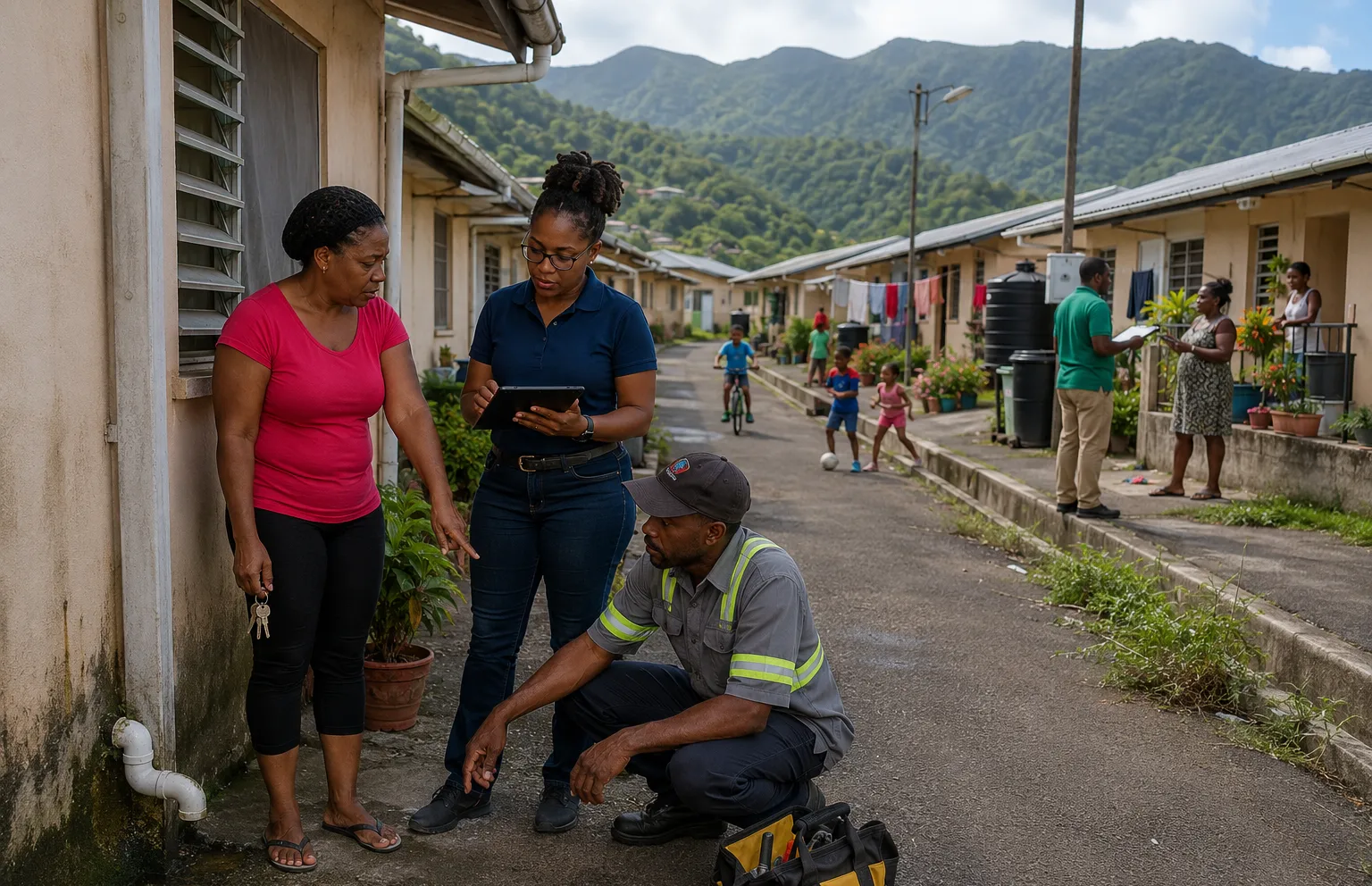
Reports of elderly residents living alongside disruptive tenants, allegations of vandalism, complaints about poor maintenance, broken infrastructure, loitering, noise and security concerns suggest that some housing developments are facing challenges that bricks and concrete alone cannot solve. If even a portion of those concerns is accurate, then the issue is no longer about construction but squarely set about management.
Building apartments is the easy part, and I think most of us can agree on that; however, creating safe, functioning communities is far more difficult. Every successful housing development requires rules, supervision, maintenance schedules, conflict resolution, security arrangements and clear accountability. Someone has to ensure that common areas are kept clean, damaged facilities are repaired promptly and residents understand that they are not simply occupying a building but sharing a community with others. Without that structure, even the most modern housing development can quickly begin to deteriorate.
This is not unique to Dominica; around the world, governments have discovered that public housing succeeds or fails not because of the architecture but because of the management systems behind it. Estate managers, resident associations, maintenance officers and community programmes often make the difference between a development people are proud to call home and one that gradually becomes associated with neglect and disorder.
The buildings themselves do not create communities. People do, and people need guidance, standards and support. If housing developments are intended to provide security and dignity for senior citizens or vulnerable families, then every effort should be made to preserve that environment. Elderly residents should not have to worry about intimidation, excessive noise or antisocial behaviour in the very place designed to improve their quality of life.
If complaints are repeatedly reaching the authorities, they deserve more than acknowledgement. I think they deserve action, decisive action, action taken a few weeks ago.
Maintenance is another part of the equation that often receives very little public attention. Every building, regardless of how well it is constructed, begins to deteriorate without regular upkeep. Plumbing systems fail, electrical fixtures wear out, paint fades, drainage becomes blocked and common areas require constant attention. Waiting until problems become major repairs is rarely the cheapest option. Preventive maintenance may not attract headlines or ribbon-cutting ceremonies, but it is what protects the public investment that taxpayers ultimately help to finance.
This is why the next phase of Dominica’s housing programme should not simply be measured by the number of additional apartments completed each year. It should also be measured by how well existing developments are being managed. Are there resident managers? Are maintenance plans being followed? Are complaints being addressed within a reasonable timeframe? Are vulnerable residents being protected? Are housing communities becoming places where families can thrive, or are they slowly developing problems that will become far more expensive to solve in the future?
Governments naturally like to count completed projects because they are visible achievements. Good management, on the other hand, is much less visible. It does not produce photographs of ribbon cuttings or ceremonial handovers.
Yet it is management that determines whether a housing programme remains a lasting success or gradually becomes a collection of buildings burdened by avoidable problems. Dominica has already invested heavily in providing homes for many citizens. The challenge now is to invest just as seriously in managing those communities so they continue serving the people they were built to help.
This article is copyright © 2026 DOM767