



Traffic laws of Dominica
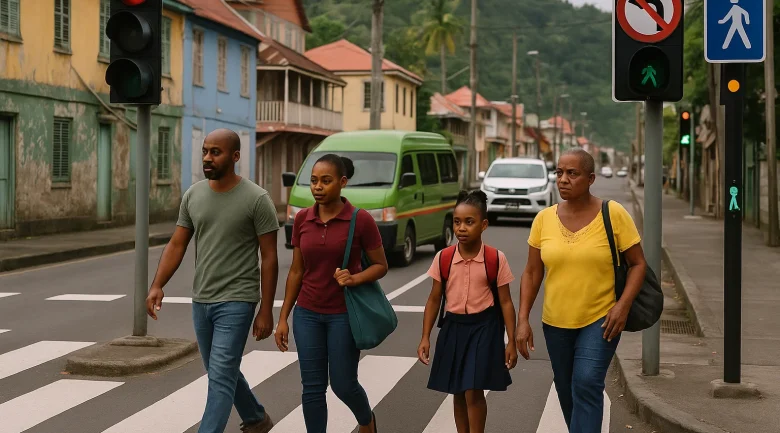
On an island like Dominica, with sharp gradients, coastal traffic, and busy town junctions, traffic laws provide essential direction for safe, predictable road movement. The system draws from the Vehicles and Road Traffic Act, a broad collection of Regulations and Orders, and sector-specific rules that govern driver conduct, commercial transport, vehicle importation, insurance requirements and enforcement procedures. Dominica’s terrain, settlement patterns and changing vehicle population have shaped a traffic environment that demands careful regulation, strong enforcement and public awareness. Key provisions establish the licensing process, outline driving standards, set penalties for offences, regulate accident procedures and signage, and address the wider conditions that shape daily travel across Dominica.
Legal Framework and Evolution of Traffic Regulation
Traffic-law development in Dominica spans several decades, beginning with early colonial-era rules for carts, animal-drawn transport and basic road maintenance. Over time, regulations expanded alongside the introduction of motor vehicles, culminating in the creation of a unified legal framework under the Vehicles and Road Traffic Act. This section explains the historical progression, the purpose of the legislation and the main legal instruments shaping modern road regulation.
Traffic regulation before widespread motorisation was limited mainly to road access, speed of horses and mules, and safe passage along trade paths. With the first motor cars arriving in the early 20th century, the colonial administration introduced basic licensing rules, simple registration requirements and penalties for reckless use on narrow mountain roads. As the number of motorised vehicles increased during the 1950s and 1960s, Dominica required a more formal system to manage public safety and establish uniform national standards.
The Vehicles and Road Traffic Act became the central legal instrument governing all matters related to vehicles. It provides definitions of vehicle types, outlines registration and inspection requirements, establishes driver licensing criteria and empowers the Licensing Authority and police to enforce compliance. Various amendments and Regulations followed, addressing modern issues such as heavy equipment operation, taxi and omnibus licensing, tint levels, trailer safety, modified lighting, child seating and commercial-transport obligations.
Subsidiary regulations strengthen the Act by offering detailed, technical rules. These include the Motor Vehicles and Road Traffic Regulations, the Traffic Signs Regulations, the Vehicle Construction and Equipment Rules, and Orders relating to bus fares, route authorisation, temporary road closures, parking controls, and fee structures. Together, these instruments form a complete legal foundation for road use.
Traffic laws continue to adapt as Dominica modernises its transport infrastructure. The rise in imported vehicles, the expansion of paved roads, and the growth of commercial transport and tourism create new challenges that require legal responses. Enforcement practices also evolve, with police acquiring new radar devices, improving training, and updating procedures for ticketing and accident reporting.
Licensing, Registration and Vehicle Standards
Licensing and registration ensure that drivers are qualified to operate the vehicles they drive and that all vehicles meet the required technical and safety standards, covering licence categories, applications, inspections, plate types, import rules, and permits for visitors or heavy equipment.
The Licensing Authority manages applications, renewals and inspections. Drivers must hold a licence appropriate for the vehicle they operate, supported by written and practical testing. Age thresholds apply to different classes: younger drivers may begin with motorcycles or private cars, while commercial classes require higher age limits and additional medical certification. Learner permits require supervision by a licensed driver and the use of visible learner plates.
Licences typically include classes for:
- private motor cars
- motorcycles
- hired vehicles, such as taxis
- omnibuses and buses
- goods vehicles
- heavy machinery and special equipment
Commercial drivers must undergo more extensive testing, sometimes including fitness tests and periodic reviews for operators of buses, goods vehicles and taxis. Renewal times vary, with some categories requiring annual renewal and others allowing multi-year validity.
Vehicle registration requires submission of ownership documents, proof of insurance and payment of the prescribed fee. Applicants must present the vehicle for inspection if required and must display plates securely and visibly.
Roadworthiness is maintained through inspections that assess lights, brakes, steering, tyres, seatbelts and general mechanical condition. Inspections are more frequent for commercial vehicles, older cars, and vehicles involved in accidents. Regulations permit inspectors to remove unsafe vehicles from circulation until repairs are completed.
Import rules help maintain safety by ensuring imported vehicles meet acceptable construction standards. Tint levels must allow sufficient light transmission for visibility. Aftermarket lighting, such as flashing blue or red lights, is restricted to authorised emergency vehicles. Modified exhaust systems, improper lift kits, and unsafe body alterations may result in registration refusal. Imported heavy equipment must comply with safety protocols for brakes, lighting, cabin structure and visibility.
Visitors may obtain temporary permits for rental cars by presenting a valid foreign licence. These permits are time-limited and must be accompanied by insurance coverage arranged through rental companies. Heavy equipment operators may require special permits that verify competency and restrict operations to approved areas.
Road Use, Conduct, Safety Rules and Public Transport Standards
Dominica’s road-use rules support safer travel through clear guidance on speed limits, signalling, overtaking, parking standards, pedestrian priority, school-zone behaviour, commercial-vehicle obligations, motorcycle rules, load limits and the challenges posed by varying road surfaces.
Speed limits depend on the location, design and use of the roadway. Urban centres such as Roseau and Goodwill generally operate at 40 km/h. Rural roads may allow up to 60 km/h, while hazardous areas feature lower posted limits. Drivers must adjust speed for weather and road conditions, especially on narrow sections such as the Imperial Road or the stretch between Salisbury and Mero, where sharp bends and cliff edges require alertness.
Overtaking is restricted on hill crests, at blind corners, over bridges, at pedestrian crossings, and in areas with solid white lines. Dominica’s terrain creates many such zones, particularly on Layou Valley Road, Ti Rocher Hill, the approach to Portsmouth, and the mountain ridge between Pont Casse and the Kalinago Territory. Drivers must signal clearly before turning or passing.
Parking rules help maintain traffic flow in dense areas. No parking is allowed on sidewalks, at intersections, within bus stops, near fire hydrants or in zones marked by signage. Roseau’s central district has designated parking areas, and police frequently monitor violations. Portsmouth features similar restrictions near the market and main bus terminal.
Seatbelts must be worn by all passengers when installed. Motorcycle riders and passengers must wear approved helmets. Children must travel in appropriate seating based on age and size. Mobile phone rules prohibit the use of handheld devices while driving. Hands-free devices may be used, but are discouraged in challenging terrain.
Public transport operates under route licences issued to minibus operators and taxi drivers. Operators must follow authorised routes, maintain vehicle fitness and comply with the fare schedule. Failure to follow routes or overloading may lead to penalties. Taxi operators must display identification and charge approved rates.
Goods vehicles have additional requirements, including load limits, securing loads to prevent spillage, and restrictions on overhang. Construction trucks must ensure materials are properly contained. Vehicles carrying hazardous goods may require additional safety protocols.
Real-world scenarios highlight the application of these rules. Drivers on the Canefield to Fond Cole corridor must account for lane merging and heavy truck traffic. The Mahaut to Massacre route features daytime congestion requiring careful signalling. The Kalinago Territory’s steep slopes demand lower speeds. Coastal winds near Pointe Michel may affect vehicle handling. Such conditions reinforce the importance of situational awareness.
Offences, Penalties, Enforcement and Accident Procedures
Traffic laws rely on effective enforcement to maintain road safety, covering offence categories, penalty systems, enforcement tools, accident response procedures, insurance requirements, and court processes that resolve road-related cases.
Offences vary from minor infractions to serious crimes involving injury or reckless behaviour. Common offences include:
- speeding
- careless driving
- dangerous driving
- driving while disqualified
- operating an unlicensed or uninsured vehicle
- ignoring traffic signs
- illegal parking
- defective vehicle operation
More serious offences involve injury, property damage or deliberate disregard for safety rules.
Penalties for minor offences may be handled through fixed-penalty tickets that drivers can pay within a specified period. Examples include speeding tickets, parking violations, failure to wear a seatbelt, improper lighting, or failure to produce insurance documents. Higher-speed violations may result in steeper fines and mandatory court appearances.
More serious offences go before the Magistrate’s Court. Dangerous driving, driving under the influence of alcohol, or driving while disqualified can lead to heavy fines, licence suspension, or imprisonment. Courts may order drivers to attend educational sessions, submit to a medical evaluation or complete community service.
Enforcement relies on the Traffic & Licensing Department, which conducts roadside checks, patrols and speed monitoring. Officers use radar guns to detect speeding. Although fixed traffic cameras are limited, temporary cameras may be deployed during safety operations. Officers may also conduct sobriety checks, document inspections, and verify route permits for buses and taxis.
Accident procedures require drivers to stop, offer assistance where possible, exchange contact and vehicle details, and notify police promptly when injury or substantial damage has occurred. They must also complete insurance forms, provide documentation within specified timeframes and understand that failure to report an accident may result in penalties.
Insurance companies investigate claims, review accident reports, and assess liability; third-party insurance covers damage to other persons or property, and negligent drivers may face premium increases or legal action.
Drivers can be disqualified for repeated or serious offences, and the licensing department records these suspensions while also determining whether a retest is needed for reinstatement. Vehicles involved in serious accidents may be required to undergo a mandatory inspection before returning to the road.
Full List of Traffic Laws, Regulations and Technical Rules
Dominica’s traffic laws are reinforced by a comprehensive list of Acts, Regulations, Orders, and technical schedules, which form the core legal instruments that structure road use across the island.
Primary Legislation:
- Vehicles and Road Traffic Act
- Insurance provisions related to motor vehicles
- Vehicle importation rules under customs guidelines
Core Regulations and Rules:
- Motor Vehicles and Road Traffic Regulations
- Road Traffic Signs Regulations
- Parking Orders for towns and urban districts
- Construction and Equipment Regulations for vehicles
- Route licensing rules for buses
- Taxi licensing requirements
- Driver testing and examination rules
- Goods vehicle operating guidelines
- Heavy equipment operation conditions
Supplementary Orders:
- Temporary road closure orders
- Traffic diversion notices
- School zone safety measures
- Speed limit alteration orders
- Vehicle inspection requirements
- Tinted window guidelines
- Helmet safety orders for motorcycles
- Commercial vehicle loading rules
Enforcement Instruments:
- Fixed penalty notice schedules
- Impoundment procedures
- Disqualification and suspension guidelines
- Ticket forms and documentary standards
These instruments, together, create the operational framework governing how drivers, pedestrians, and transport operators navigate the island’s roads.
Practical Guidance for Drivers, Visitors and Transport Operators
Daily driving in Dominica presents unique challenges due to the terrain, steep gradients and limited road width in rural areas. Drivers must take extra caution during heavy rainfall, on sharp bends and along cliffside routes. The west coast highway, Layou Valley Road, and the interior roads between Pond Casse and Castle Bruce illustrate varied conditions that require careful attention.
Visitors must secure temporary permits from the Licensing Department or rental agencies, carry insurance documents and follow local speed limits. Rental vehicles should be inspected before use, and drivers must familiarise themselves with road signs and local rules.
Transport operators responsible for fleets must keep complete inspection, insurance and licence records, with scheduled checks reinforcing safety compliance for goods vehicles and buses running high-frequency routes.
As Dominica expands its infrastructure and manages growing vehicle numbers, traffic laws continue to adjust, supported by public education, active enforcement and steady legislative updates that help maintain safer roads.


