


Seamoss Varieties in Dominica
Seamoss varieties in Dominica may be limited to two primary species, Gracilaria and Eucheuma, but they thrive in one of the Caribbean’s most vibrant marine ecosystems. Cultivated and harvested along the island’s rugged coastline, these sea vegetables support a growing natural wellness industry rooted in the sustainable use of the Caribbean Sea. From traditional harvesting in coastal communities to modern farming practices near marine reserves, Dominica’s seamoss industry is shaped by the health of its surrounding waters and the stewardship of its fishing villages.
The Two Key Species: Gracilaria and Eucheuma
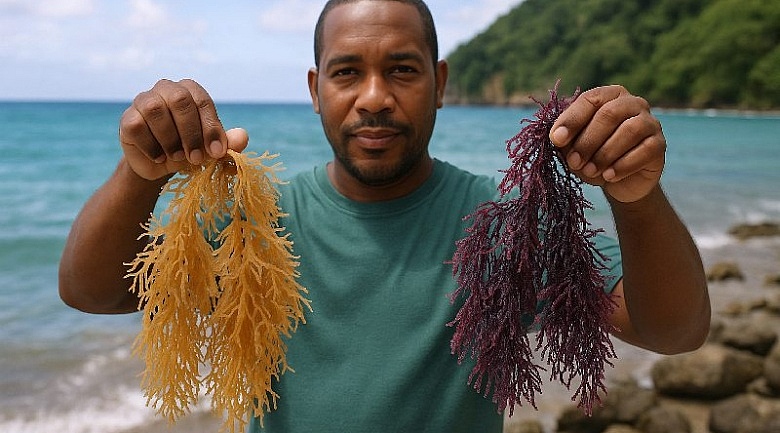
- Gracilaria, typically golden or light green, is soft and ideal for smooth gel production. Its subtle taste and mineral profile make it a go-to for food and skin care uses.
- Eucheuma is more robust and branches into gold, green, and purple hues. It produces a denser gel and is rich in nutrients like calcium, potassium, and iron.
These species are either wildcrafted or cultivated using environmentally friendly techniques, particularly in coastal villages like Bense, Woodford Hill, Castle Bruce, and San Sauveur.
Farming vs. Wild Harvesting Along the Coastline
Dominica’s coastline offers both wild and farmed seamoss. Wildcrafted seamoss is hand-harvested by local fishers and seaweed gatherers, often near rocky shallows or tidal pools where marine life thrives. This method is common in areas adjacent to marine reserves, such as the Soufriere-Scotts Head Marine Reserve, where marine biodiversity is actively protected.
In contrast, farmed seamoss is cultivated using rope-line systems suspended in nearshore waters. This sustainable method is popular in calm bays and seen in seamoss harvested along Dominica’s west coast.
Color Varieties and Nutrient Composition
While species are few, their color variations provide different applications:
- Gold seamoss is the most widely used, packed with minerals and suitable for everyday consumption.
- Purple seamoss retains antioxidant compounds and is often less processed, appealing to raw food consumers.
- Green seamoss, though less abundant, is high in chlorophyll and associated with detox products.
These variations are shaped by sunlight exposure, salinity, and marine biodiversity, offering a link between ocean health and nutritional output. Quality control processe, highlighted in Seamoss Processing in Dominica ensure that each variety meets standards for export.
Local Impact and Marine-Smart Growth
Despite the limited number of species, Dominica seamoss plays a large role in the country’s blue economy. Seamoss production provides income diversification for coastal communities, many of which have seen declines in traditional fishing due to climate stress and stock depletion.
Government support through agencies like DEXIA, and training in eco-friendly marine harvesting practices, has enabled producers to build sustainable businesses. Local cooperatives and youth groups featured in Women and Youth in Dominica’s Seamoss Economy are embracing this seaweed-led transformation, using marine-friendly practices to ensure a lasting future for Dominican fishing villages.


