




Riot Act (Chapter 10:02)
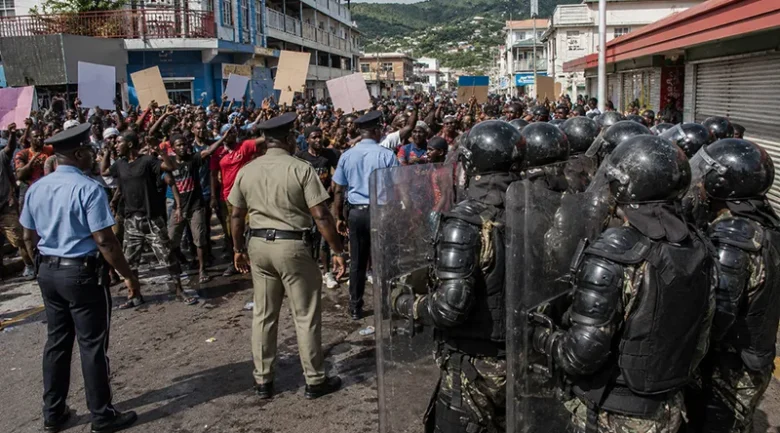


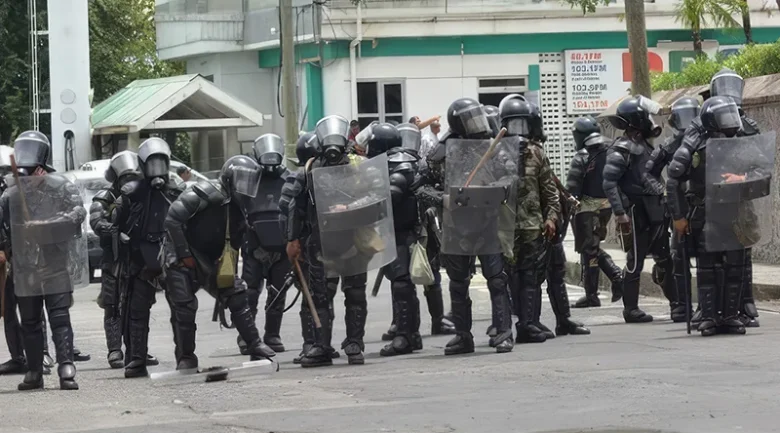
The Riot Act (Chapter 10:02) is a foundational piece of public order legislation within the Revised Laws of the Commonwealth of Dominica. Originally enacted under British colonial administration, this statute was designed to grant the executive branch and law enforcement authorities sweeping mechanisms to suppress internal civil unrest, prevent property destruction, and disperse assemblies deemed a threat to public tranquility. Though rooted in colonial governance, the Act was retained post-independence and remains an active component of Dominica’s modern criminal law framework. The statute establishes the strict criteria where a public gathering transitions from a lawful assembly into a criminal breach of the peace, providing the State with exceptional summary and indictable powers to preserve public safety.
Historical Origins and Legislative Context
To understand the exceptional legal severity of the Riot Act (Chapter 10:02), it must be examined through the lens of its historical development. Enacted in 1897, the statute directly mirrored the English Riot Act of 1714 and similar imperial codes implemented across the British Empire. These laws were engineered to protect colonial infrastructure, trade networks, and administrative offices from popular uprisings, strikes, and localized rebellions.
Following independence, the text was consolidated into the 1990 Revised Laws of Dominica as Chapter 10:02. It stands as a prime example of an imperial emergency statute adapted into the framework of a modern sovereign democracy, a duality that continues to generate rigorous judicial and political debate regarding its placement within a constitutional state.
The Three Progressive Legal Thresholds of Public Disorder
The architecture of Chapter 10:02 relies on a strict progression of public assembly behavior. The law establishes three distinct legal phases, each escalating the criminal culpability of the individuals involved:
Unlawful Assembly
An unlawful assembly occurs when three or more individuals gather with a shared intent to execute a violent enterprise, or to achieve any common objective (whether lawful or unlawful) in a manner so tumultuous that it causes reasonable, firm, and courageous persons in the vicinity to fear a breach of the public peace. The defining element is not the illegality of the group’s objective, but rather the threatening manner of their assembly.
Rout
A rout represents the preparatory movement toward the execution of the assembly’s unlawful intent. It is legally defined as an unlawful assembly that has made an overt motion, step, or physical advance toward completing its tumultuous purpose. A rout serves as the mid-point between an illegal gathering and active rioting.
Riot
A gathering officially transitions into a statutory riot when the unlawful assembly begins to execute its common purpose in an active, violent, and chaotic manner, causing genuine terror to the general public. Under common law principles incorporated into Chapter 10:02, a riot does not require long-term premeditation; a peaceful, legally permitted gathering can spontaneously transform into a riot if the participants collectively adopt an aggressive, tumultuous course of action.
The Statutory Proclamation: Operational Mechanics
The defining operational characteristic of the Act is the formal mechanism used to disperse a crowd, colloquially known as “reading the Riot Act”. This process is governed by exact statutory mandates that must be precisely executed to trigger the felony provisions of the Act.
The proclamation can only be officially invoked if there is a tumultuous assembly consisting of twelve or more persons. Under Section 3, specific state officials hold the legal capacity to read the proclamation, including Magistrates, Justices of the Peace, Mayors, or commissioned officers of the Royal Dominica Police Force.
The authorized official must position themselves as close to the rioters as safety permits, command silence by a loud voice, and deliver the specific statutory text, ordering all persons to immediately and peaceably depart to their homes or lawful occupations. The reading of the proclamation starts a definitive, one-hour countdown clock. If members of the crowd remain gathered after this sixty-minute window expires, their legal status changes automatically; they are no longer committing a minor misdemeanor, but are instantly guilty of a major felony.
Statutory Indemnity and the Legalization of State Force
Section 5 of Chapter 10:02 introduces one of the most powerful and controversial protections in Dominica’s legal code: absolute statutory indemnity for law enforcement personnel.
If the assembled individuals refuse to disperse within one hour of the formal reading, the Act commands the police or any citizens called upon to aid them to seize and apprehend the non-compliant persons. If any rioters resist arrest and are subsequently injured or killed during the dispersal operation, the Act grants complete civil and criminal immunity to the police officers, military personnel, or assisting citizens involved. This clause functions as a preemptive statutory shield, blocking subsequent charges of murder, manslaughter, or unlawful wounding from being brought against state actors, provided the force was applied strictly to disperse an assembly that defied the one-hour proclamation window.
Felony Offenses and Penalties Under Chapter 10:02
The penal structure of the Act is designed to protect state infrastructure and deter resistance to lawful authority. Violations are prosecuted on indictment before the High Court of Justice:
- Opposing or Obstructing the Proclamation: It is a severe statutory felony to willfully oppose, obstruct, or physically hinder any Magistrate or police officer attempting to read the proclamation. If a crowd prevents an official from reading the text via threats or force, those who actively block the official, along with any participants who fail to disperse knowing the proclamation was prevented, face maximum statutory terms of imprisonment.
- Remaining Assembled Post-Proclamation: Any individual who knowingly remains part of the twelve-person assembly one hour after the proclamation has been read commits a felony. Due to the historical nature of the text, maximum penalties can include life imprisonment depending on the level of destruction or violence linked to the event.
- Riotous Demolition of Property: The Act contains distinct, indictable provisions targeting the structural sabotage of urban spaces. If rioters unlawfully and with force demolish, pull down, or destroy any church, chapel, public administration building, dwelling house, barn, or commercial warehouse, they face independent felony convictions separate from standard property damage charges.
Modern Application and ECSC Constitutional Challenges
The survival of a nineteenth-century public order statute within twenty-first-century Dominica has led to significant judicial friction, culminating in high-profile constitutional challenges within the Eastern Caribbean Supreme Court (ECSC) system.
A key moment in the modern evolution of the Act occurred following political protests in Roseau, which led to several individuals being arrested and charged under Section 4 of Chapter 10:02. In 2016, a constitutional motion (Hector John et al. v. The Chief Magistrate et al., Claim No. DOMHCV 2016/0067) was filed in the High Court of Dominica. The claimants sought formal declarations that various sections of the Riot Act, and the statute as a whole, directly violated the fundamental rights guaranteed by Chapter 1 of the Dominica Constitution Order.
The core legal argument centered on the supremacy clause found in Section 117 of the Dominica Constitution, which dictates that if any law is inconsistent with the Constitution, it is void to the extent of that inconsistency. Legal scholars and human rights advocates have continuously argued that the Riot Act’s vague definitions of “tumultuous behavior,” its inverted common-law safeguards, and its sweeping indemnity clauses are fundamentally incompatible with modern constitutional guarantees regarding freedom of expression, freedom of peaceful assembly, and protection from the arbitrary use of excessive state force. While the courts have historically exercised caution before striking down entire public order statutes, the ongoing litigation emphasizes a growing push for statutory modernization to balance state security with democratic freedoms.


