




Registrar of Titles
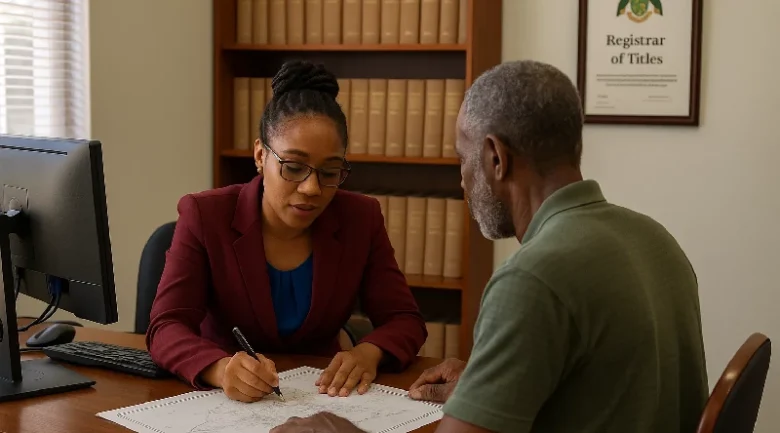
The Registrar of Titles in Dominica is the official entrusted with administering the country’s land registration system under the Title by Registration Act (TRA). This role is pivotal to the integrity and efficiency of property ownership, ensuring that titles to land are properly recorded, disputes are minimised, and transfers are transparent. The office is an essential part of Dominica’s legal framework for securing land rights, issuing Certificates of Title, and maintaining the Land Titles Register.
Responsibilities and Legal Authority
Operating under Chapter 56:50 of the Revised Laws of Dominica, the Registrar of Titles is authorized to oversee all functions related to land registration. These include processing first-time applications for certificates of title, entering details of transfers, mortgages, and leases, and handling matters such as caveats, transmissions, and boundary changes. All applications must be submitted in compliance with formal procedures, including licensed surveys and statutory declarations. The Registrar also has the power to summon parties, request affidavits, and conduct hearings on disputes involving land.
The Registrar acts as a neutral party, ensuring that transactions meet all legal requirements before being recorded in the register. Under the Torrens system, the act of registration confers legal ownership, not the deed itself. This means the Registrar’s entries have binding legal effect, and no transaction is valid until properly recorded.
Role in Land Disputes and Adverse Possession
In cases where disputes arise over ownership, the Registrar of Titles may be called to testify, submit records, or act upon judicial directions. One notable area of interaction involves adverse possession claims under the Real Property Limitation Act (RPLA). Even where a certificate of title exists, a person who has been in open, continuous possession of land for at least 12 years may petition for ownership. The Registrar must evaluate the legal basis and proper documentation before recognizing such claims, often acting in accordance with court decisions or directives from the Chambers of the Attorney General.
The George v Guye (CCJ, 2019) case reaffirmed that the Registrar’s duties must align with statutory limits, particularly in cases where adverse possession challenges registered titles. This reinforces the importance of thorough, lawful review before issuing or updating a certificate.
Transparency, Modernization, and Public Access
While the Registrar of Titles continues to function using legally required hard-copy registers, efforts have been made to modernize operations, including digitization of records and online search capabilities. However, applicants must still appear in person or through legal representatives for formal procedures. Certified copies of certificates, land plans, and register entries are available to the public for a nominal fee, reinforcing transparency in land dealings.
In recent years, the Registrar has played a key role in government initiatives such as the Land Titles Assurance Fund, which compensates individuals who lose valid claims due to fraud or clerical errors. The Registrar also liaises with the Ministry of Housing and Urban Development, especially during land settlement schemes and housing regularization efforts for squatters or resettled communities.


