




Quarantine Act (Cap. 40:01)
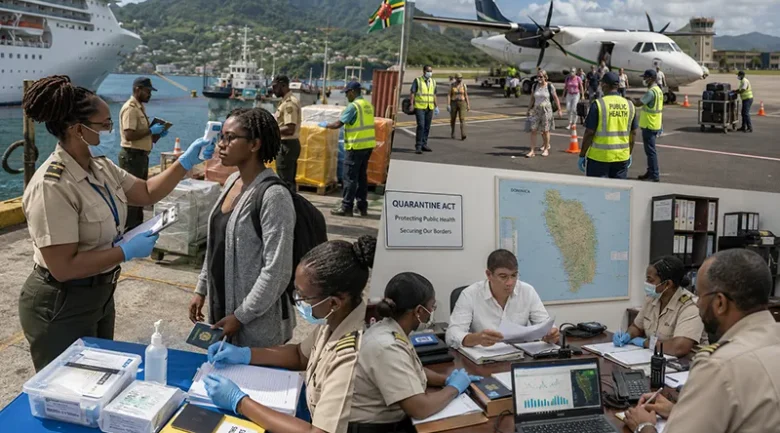
The Quarantine Act (Cap. 40:01) serves as the primary legislative foundation for protecting the Commonwealth of Dominica from the introduction and propagation of infectious diseases across its national borders. This statutory entry outlines the scope, legal mechanisms, and institutional frameworks governing maritime and aerial health security.
Institutional Infrastructure and Scope
The Quarantine Act establishes a centralized regulatory framework designed to monitor, intercept, and manage potential biological risks entering Dominica via international transit routes.
The Quarantine Authority
The primary administrative power under the statute is vested in the designated Quarantine Authority, represented by the Chief Medical Officer (CMO) of Dominica. The Authority holds wide-ranging operational jurisdiction to execute the provisions of the Act, including directing health officers, visiting officers, and quarantine guards stationed at designated national entry points.
Regulated Sectors and Vectors
The enforcement mechanisms of the Quarantine Act extend universally across all incoming transport networks, specifically targeting three primary areas:
- Maritime Vessels: All ships, commercial carriers, yachts, and smaller sea crafts entering the territorial waters or berthing at national ports of entry, including the Roseau Cruise Ship Berth, Woodbridge Bay Deep Water Harbour, and the Cabrits Cruise Ship Berth in Portsmouth.
- Commercial and Private Aircraft: All aircraft landing within the national jurisdiction, primarily operating through Douglas-Charles Airport in Melville Hall and Canefield Airport.
- Persons and Cargo: All passengers, crew members, baggage, ship stores, and imported materials capable of harbouring or transmitting infectious pathogens or vectors.
Key Statutory Provisions
The core of the statute establishes precise legal timelines and explicit administrative procedures for public health surveillance at national borders. These clauses delineate local operational protocols, information gathering duties, and containment strategies to minimise public exposure to biological threats.
General Health Regulations
The Act grants the executive branch, via the responsible Minister, the statutory power to formulate specific regulations to govern maritime and air travel. These provisions encompass the standard protocols enacted under the Quarantine (Maritime) Regulations and the Quarantine (Air) Regulations, which command:
- Epidemiological Disclosures: Compulsory transmission of sanitary and health information by vessel masters and aircraft commanders prior to or upon arrival.
- Signal Systems: Obligatory visual or wireless signals displayed by vessels approaching port to indicate their sanitary status.
- Pratique Procedures: The formal granting of “Radio Pratique” or physical health clearance before any vessel is permitted to dock, discharge cargo, or allow passengers to disembark.
Detention and Isolation Protocols
Under Section 4 of the Act, health authorities possess explicit legal backing to execute non-discretionary containment measures when an infectious threat is identified:
- Vessel Interception: The mandatory routing of suspected carriers to designated quarantine anchorages or mooring stations for comprehensive evaluation.
- Disinfection and Destruction: Authorized power to disinfect, fumigate, or entirely destroy baggage, cargo, or materials deemed contaminated or high-risk.
- Observation and Segregation: The physical detention and monitored isolation of passengers or crew members arriving from high-risk endemic zones or exhibiting symptoms of infectious illnesses.
Enforcement Mechanisms and Penalties
To maintain high population-level immunity and border security, the legislation implements strict compliance frameworks through institutional exclusions and compounding financial liabilities. These measures empower local authorities to penalize non-compliance while protecting public educational and security structures.
Police Enforcement Powers
Section 10 of the Quarantine Act explicitly mandates all members of the Commonwealth of Dominica Police Force (CDPF) to enforce absolute compliance with the directives issued by the Quarantine Authority. Police officers are legally empowered to:
- Board any maritime vessel or aircraft within national jurisdiction using force if necessary.
- Enter any land, port facility, or transit premises without a warrant to apprehend individuals violating quarantine orders.
- Detain fleeing passengers or crew members and return them forcibly to designated isolation facilities.
Statutory Offenses and Legal Liabilities
Non-compliance with the provisions of the Quarantine Act or its auxiliary rules constitutes a summary offense. Legal penalties are triggered under several distinct categories of violation:
| Offense Category | Specific Prohibited Action | Legal Recourse / Consequence |
| Information Obstruction | Refusing to answer official health queries, knowingly supplying false answers, or withholding required documentation. | Summary conviction before a Magistrate; financial fine and liability. |
| Direct Non-Compliance | Refusing or willfully omitting to carry out a lawful order, instruction, or isolation condition imposed by a health officer. | Immediate physical detention by police; prosecution under summary court. |
| Unauthorized Movement | Moving a vessel or aircraft from a designated quarantine station without express permission from the Authority. | Strict financial penalty levied against the master, commander, or local shipping agent. |
| Unauthorized Boarding | Attempting to board or depart an isolated vessel or entering a restricted quarantine facility without proper accreditation. | Immediate removal, mandatory quarantine placement, and subsequent prosecution. |
Recovery of Costs
All financial expenses incurred by the Quarantine Authority for the maintenance, disinfection, isolation, or medical treatment of vessels, crew, and passengers are legally recoverable. The statute permits the state to sue responsible parties before a court of competent jurisdiction, utilizing an official certificate signed by the Quarantine Authority as prima facie evidence of the outstanding debt. All recovered funds are paid directly into the Treasury for national public utility.


