




National School Nutrition Policy of Dominica
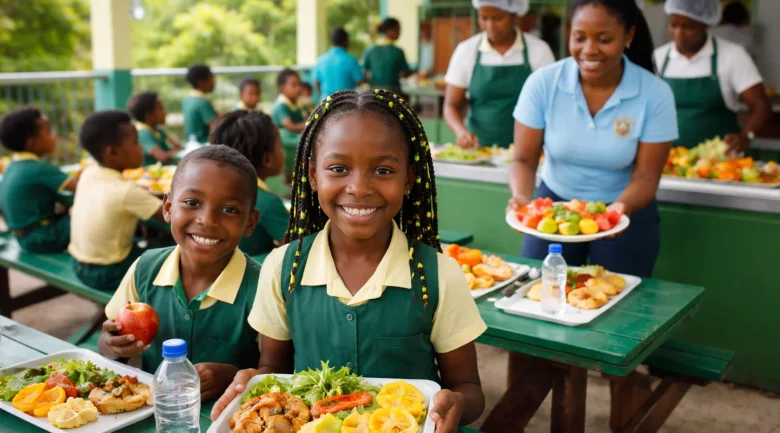
The National School Nutrition Policy of Dominica is a multi-sectoral strategic framework designed to regulate the food environment within educational institutions across the island. Developed through a partnership between the Ministry of Education and the Ministry of Health, the policy addresses the critical intersection of public health and academic performance. Its primary mandate is to reduce the prevalence of childhood obesity, iron deficiency (anaemia), and dental caries while laying the foundation for preventing non-communicable diseases (NCDs) such as type 2 diabetes and hypertension later in life.
Implementation Status and Incomplete Nature
The policy is “incomplete” in terms of its phased rollout and legislative finalisation. While work on the policy began as early as 2012, its implementation has been iterative rather than immediate:
- Policy Endorsement: The overarching National Nutrition Policy (2022–2032) was endorsed to provide a 10-year roadmap. However, the specific School Feeding Policy Action Plan, the operational manual for daily school life, was scheduled for formal endorsement in late 2025.
- Active Transition: The policy is in an active implementation and training phase. In November 2025, Dominica entered a specialised agreement with the Caribbean Public Health Agency (CARPHA) and the Pan American Health Organization (PAHO) to receive country-specific training. This was designed to help school food providers and vendors align their menus with new regional technical standards.
- Scaling Up: While the School Feeding Programme has existed since 1991, the new policy mandates a significant expansion. By early 2026, the government aims to achieve near-universal coverage for primary and secondary students, moving away from a “vulnerability-based” model to a universal “health-based” model.
Core Pillars of the Policy
The policy is structured around five strategic areas intended to create a holistic healthy school ecosystem:
- The Food Service Environment: This pillar sets strict standards for all food served on campus. It mandates reductions in sodium, saturated fats, and free sugars. Crucially, it introduces a traffic-light or tiered system to categorise foods, effectively banning the sale of ultra-processed snacks and sugar-sweetened beverages (SSBs) at school gates.
- Nutrition and Health Services: This involves routine screening of students for Body Mass Index (BMI) and iron levels, ensuring that the school system acts as a frontline for early intervention against NCDs.
- School Curriculum: Integration of nutrition education into the Health and Family Life Education (HFLE) curriculum. Students are taught to read food labels and understand the nutritional value of indigenous Dominican produce.
- Community and Parent Involvement: Recognising that school habits can be undone at home, the policy includes outreach to parents and provides guidelines for lunch box contents for students who do not participate in the formal meal programme.
- Policy Monitoring and Evaluation: A multi-sectoral committee is tasked with conducting unannounced inspections of school kitchens and vendors to ensure compliance with the Food Safety Act 2026.
The Grow What We Eat Initiative and Agriculture
A defining feature of the Dominican policy is its deep integration with the national agricultural sector. The policy formalises the “Grow What We Eat” philosophy, requiring that the School Feeding Programme procure a minimum percentage of its ingredients from local family farmers. This farm-to-school link serves two purposes:
- Freshness: It ensures students consume whole, fresh foods (such as dasheen, plantains, and local citrus fruits) rather than imported canned substitutes.
- Economic Resilience: It provides a guaranteed market for Dominican farmers, strengthening the rural economy and reducing the national food import bill.
Many schools have also established Backyard School Gardens, which serve as living laboratories where students learn about food security while contributing to their own lunch supplies.
Financial and Legislative Backing
To ensure the policy is not an unfunded mandate, the Government of Dominica introduced targeted fiscal measures. In the 2024–2025 National Budget, the excise tax on sugar-sweetened beverages was increased to $1.00 per litre. These tax revenues are specifically earmarked to fund the modernisation of school kitchens and the subsidisation of healthy meals for students in low-income districts. Furthermore, the policy aligns with the National Multi-Sectoral Action Plan for the Prevention and Control of Non-Communicable Diseases (2019–2025), providing the legal basis to restrict the marketing of unhealthy foods to children on or near school grounds.
Future Outlook: 2030 Targets
The National School Nutrition Policy is a cornerstone of Dominica’s goal to reduce national obesity rates by 30% by the year 2030. The current focus has shifted toward rigorous enforcement of vendor licensing and the stabilisation of supply chains. The policy remains a living document, subject to annual reviews by the Ministry of Health to adapt to emerging public health data.


References
-
1.
Work Continues on School Nutrition Policy: GIS https://www.news.gov.dm/news/news-items/work-continues-on-school-nutrition-policy
-
2.
Nutrition Unit – Health Promotion Unit Dominica https://healthpromotion.gov.dm/programmes/nutrition
-
3.
Food and Nutrition Security Policy and Plan of Action (2014–2024) https://extranet.who.int/ncdccs/Data/DMA_B13_January%202014%20rev%20Final%20revised%20Dominica%20Policy%2013.doc