




Geothermal Resources Development Act No. 12 of 2016
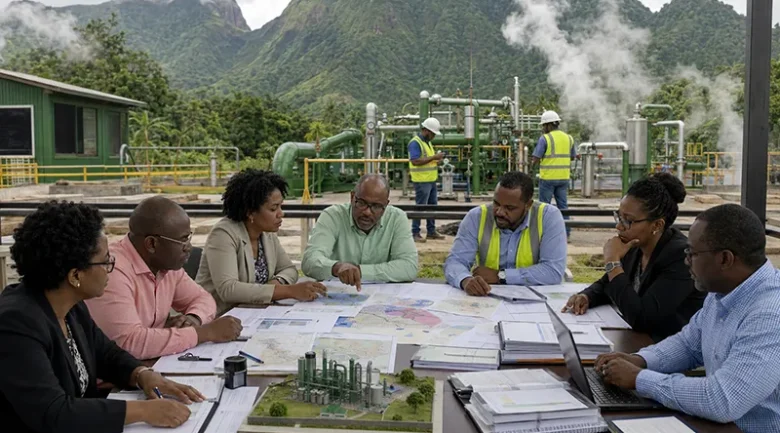
The Geothermal Resources Development Act No. 12 of 2016 is the primary piece of legislation governing the exploration, exploitation, allocation, and commercial management of sub-surface geothermal energy within the Commonwealth of Dominica. Enacted by the House of Assembly to replace the Geothermal Energy Act of 1974 (Chapter 85:02), this comprehensive law provides a modern, commercially viable, and environmentally sound regulatory framework designed to facilitate the island’s transition to a green economy. By defining the legal nature of geothermal resources as a sui generis (unique) class of property vested entirely in the State, Act No. 12 of 2016 aims to secure national energy independence, insulate domestic consumers from volatile international fossil fuel prices, and establish clear guidelines for public-private partnerships (PPPs).
Constitutional Foundations and Legal Framework
The development of geothermal energy in Dominica is inextricably linked to the island’s unique volcanic geology. Located within the Lesser Antilles volcanic arc, Dominica features nine active volcanoes, with the most commercially viable high-temperature geothermal reservoir situated in the Roseau Valley, centred on the villages of Wotten Waven, Laudat, and Trafalgar.
Act No. 12 of 2016 creates a structured legal process to manage this national asset. It coordinates the regulatory authority of the Ministry responsible for energy, the Geothermal Resources Advisory Committee, and the independent utility regulator, the Independent Regulatory Commission (IRC). The statute modernizes the investment environment by offering absolute regulatory clarity, defining property rights, and balancing private capital requirements with local environmental preservation and landowner protection.
Property Rights and the Sui Generis Classification
One of the most innovative elements of the Geothermal Resources Development Act No. 12 of 2016 is its precise legal classification of geothermal resources. Under Section 2, “geothermal energy” is defined as the energy derived or derivable from and produced within the earth by natural heat phenomena, including steam, hot water, and any associated brines.
To bypass long-standing legal debates regarding subsurface property rights, the Act explicitly declares that a geothermal resource is a sui generis form of property. The statute establishes that geothermal resources are:
- Not a mineral resource: It cannot be claimed or regulated under conventional mining and quarrying laws.
- Not a standard water resource: It is exempt from conventional domestic water rights and water management acts, despite utilising hydrothermal fluids.
- Not standard real property: It is entirely decoupled from surface land ownership.
Because geothermal resources are classified outside standard real property parameters, they are explicitly not subject to the Aliens Land Holding Regulation Act. This exemption allows foreign developers and international financiers to secure exploration and concession agreements without navigating the restrictive permitting processes typically required of non-nationals purchasing real estate. All geothermal resources within the territory and exclusive economic zone of Dominica are vested directly in the State, and rights to exploit them may be granted only under this Act.
Core Administrative and Consultative Entities
The administrative architecture created by Act No. 12 of 2016 emphasizes inter-agency collaboration and technical expertise to oversee developers.
The Geothermal Resources Advisory Committee
The Act establishes the Geothermal Resources Advisory Committee, a high-level technical body comprising no more than six members. The composition of this committee ensures that energy development is aligned with national planning, law, utility economics, and engineering standards. The panel includes:
- The Permanent Secretary of the Ministry responsible for energy (serving as Chairperson).
- The Executive Director of the Independent Regulatory Commission (IRC).
- The Chief Physical Planner from the Physical Planning Division.
- A Senior State Attorney from the Chambers of the Attorney General.
- Senior technical public officers specializing in geology, hydrology, or electrical engineering.
The advisory body is legally mandated to review all applications for resource exploration and concessions, monitor reservoir pressure and reinjection practices, and advise the Minister on the designation of special geothermal zones.
The Two-Tiered Licensing and Allocation System
Act No. 12 of 2016 discards the ambiguous, informal permitting procedures of the past and installs a transparent, two-tiered statutory mechanism that separates initial surface exploration from long-term commercial extraction.
1. Geothermal Exploration Agreement
Before a developer can clear land, cut access roads, or initiate deep exploration well-drilling, they must enter into a formal Geothermal Exploration Agreement authorized by the Minister. This agreement grants exclusive, time-bound exploration rights within a specified geographic area. The developer must demonstrate technical competency, prove their financial capability to absorb exploration risks, and deposit necessary performance bonds with the Treasury.
2. Geothermal Resources Concession
Once production capacity is proven via successful well-testing, the developer must apply for a Geothermal Resources Concession. This concession provides the long-term legal security required to operate commercial-scale power plants. The concession details the developer’s obligations regarding steam extraction volumes, mandatory fluid reinjection into the reservoir to maintain pressure, and the payment of royalties and administrative fees to the State.
Key Statutory Differences: The 1974 Act vs. The 2016 Act
The Geothermal Resources Development Act No. 12 of 2016 represents a comprehensive legal modernization compared to the original Geothermal Energy Act of 1974 (Chapter 85:02). The older law was drafted when geothermal technology was highly experimental and before Dominica transitioned to full independence.
| Statutory Element | Geothermal Energy Act of 1974 (Chapter 85:02) | Geothermal Resources Development Act No. 12 of 2016 |
| Legal Classification | Vaguely defined as a subsurface natural resource; property rights remained bound to mineral analogies. | Explicitly codified as sui generis property, distinct from minerals, water, or real estate. |
| Foreign Investment | Lacked specific pathways for international finance, subjecting developers to standard land acquisition barriers. | Exempts geothermal resources from the Aliens Land Holding Regulation Act, lowering barriers for international capital. |
| Regulatory Oversight | Contemplated a single “Geothermal Authority” and a state-run “Dominica Geothermal Company”. | Replaces the monolithic authority with the Geothermal Resources Advisory Committee and integrates the IRC. |
| Environmental Protections | Contained basic, rudimentary environmental provisions; silent on systemic climate resilience. | Coordinates directly with the Physical Planning Act of 2002 and enforces Environmental Impact Assessments (EIAs). |
| Land Access | Provided basic government access but lacked robust mechanisms for local community consultation or easements. | Features clear provisions for compulsory land acquisition under the Land Acquisition Act and formal easement rules. |
Environmental Governance and Land Integration
To ensure that industrial resource development does not compromise Dominica’s natural landscape, eco-tourism assets, or pristine river systems, Act No. 12 of 2016 sets forth mandatory environmental safeguards.
Streamlined Environmental Permits
The Act coordinates directly with the Physical Planning Act, 2002. A signed Geothermal Exploration Agreement or Geothermal Concession automatically fulfills the structural development and building permissions required under Sections 17(1) and 62 of the Physical Planning Act, minimising administrative duplication. However, developers are strictly required to prepare a comprehensive Environmental Impact Assessment (EIA) before starting any deep well-drilling or testing phase. The EIA must details plans for:
- Preventing groundwater contamination from heavy metals or toxic gases (such as hydrogen sulfide).
- Controlling noise pollution during high-pressure steam venting.
- Mitigating civil disturbances near adjacent communities within the Roseau Valley.
Land Acquisition and Easements
Geothermal pipelines, transmission lines, and power stations require significant spatial footprints across private and public lands. Where the Advisory Committee confirms that specific parcels are necessary for public energy infrastructure, the state is legally empowered to step in:
- Compulsory Purchase: The State may compulsorily purchase the required land in accordance with the Land Acquisition Act, treating it as an acquisition for public use.
- Easement Acquisition: Alternatively, the State may acquire a dedicated easement over the land, permitting the developer to clear, install, and maintain overhead or underground utility equipment while allowing landowners to retain nominal title.
Compliance, Enforcement, and Financial Penalties
Part VII of the Act outlines strict enforcement measures designed to prevent unauthorized drilling or environmental negligence.
The Minister, acting on technical advice from the Advisory Committee, has the statutory power to suspend or completely revoke a Geothermal Concession if a developer falls into structural default. Grounds for termination include failing to perform work according to agreed timelines, failing to pay state royalties, violating environmental thresholds, or refusing to maintain appropriate public liability insurance. Any entity that initiates geothermal exploration, deep drilling, or commercial sales without entering into an authorized agreement faces severe criminal prosecution, high financial fines, and the immediate seizure of all operational infrastructure by state marshals.


