

Elsworth Carter
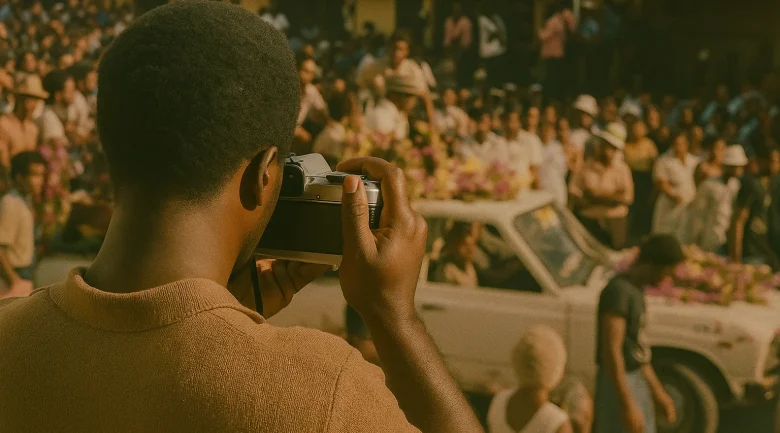
Elsworth “Elmo” Carter was a Dominican journalist and broadcaster widely respected for his integrity, clarity, and balanced reporting during Dominica’s politically transformative years from the 1970s into the 1980s. Known for his steady voice and factual approach, Carter helped shape journalism in a newly independent nation, guiding Dominicans through moments of uncertainty with honesty and composure.
Early Life and Journalism Career of Elsworth
Born in Roseau, Elsworth Carter was educated locally and developed a strong interest in communication, public affairs, and current events. He began his professional career in the late 1960s, writing for community newsletters before joining Radio Dominica, where his factual, impartial style quickly earned him respect. His early reports focused on education, labour, and community life, themes that reflected his empathy for working class Dominicans.
By the mid-1970s, Carter had established himself as a central figure in national broadcasting. His voice became synonymous with calm, credible reporting during key moments in Dominica’s modern history, including the island’s Independence in 1978, the exposure of the Operation Red Dog conspiracy in 1981, and especially the May 29th 1979 Uprising.
During the violent protests that erupted in Roseau against the Patrick John administration, Carter provided firsthand coverage and updates from the ground. However, in the chaotic aftermath, he was briefly detained by authorities, accused of spreading information that was alleged to have intensified public unrest. He was released shortly after, without charge, but the incident revealed the vulnerability of journalists working under political tension. His calm response and subsequent return to Radio Dominica strengthened his public reputation as a professional committed to truth, even under personal risk.
Legacy and Public Influence
A firm believer in journalistic ethics, Carter championed accountability, civic education, and the media’s independence from political influence. He mentored younger reporters, emphasising accuracy, humility, and the journalist’s duty to truth. Colleagues described him as disciplined, thoughtful, and deeply respectful of his audience, qualities that distinguished him from the more sensationalist voices emerging in regional media.
Throughout his career, Carter promoted the idea that journalism was a public service vital to democracy. His attention to rural communities, youth issues, and economic hardship gave visibility to those often left unheard. Though never seeking political office, his work profoundly influenced Dominica’s public consciousness and strengthened its democratic identity.
Elsworth “Elmo” Carter remains remembered as a principled journalist whose legacy endures through the credibility he built, the voices he amplified, and the national unity he quietly helped sustain.


