
Duke of Edinburgh International Award Dominica
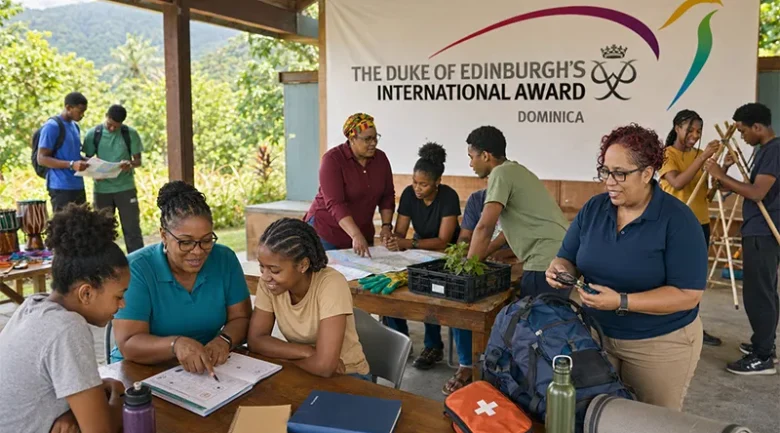
The Duke of Edinburgh International Award Dominica is a structured, non-formal education and youth empowerment framework operating within the Commonwealth of Dominica. Established locally to foster resilience, self-reliance, leadership, and civic responsibility among young people aged 14 to 25, the program serves as a critical bridge between formal academic systems and community development. The award operates as a highly inclusive platform that welcomes participants regardless of their socio-economic standing, geographical isolation, or physical abilities.
Administratively, the award in Dominica is driven by an executive national committee that operates under the patronage of the Head of State, the President of the Commonwealth of Dominica. The national office functions in strategic partnership with the state’s Youth Development Division in Roseau alongside uniformed organizations, including the Dominica Cadet Corps, the Dominica Scout Organization, and the Dominica Girl Guides Association.
Historical Evolution and Institutional Context
The global initiative was founded in 1956 by His Royal Highness Prince Philip, the late Duke of Edinburgh, to encourage young people to challenge themselves and contribute to their communities outside standard academic channels.
Introduction and Early Years (1966–1968)
The program was formally introduced to the pre-independence territory of Dominica in 1966. Initial local chapters were organized under colonial educational structures, gaining substantial traction between 1968 and the early 1970s at premier secondary institutions, notably the Dominica Grammar School and Wesley High School in Roseau. Throughout its multi-decade history in Dominica, the organisation has experienced periods of intense activity balanced by operational dormancy, typically induced by macroeconomic shifts or severe weather disruptions.
The 2008 Modernization and Civic Realignment
In 2008, the program underwent a comprehensive institutional restructuring. To ensure nationwide coverage, the national executive formalised its relationship with the Youth Development Division. This collaboration allowed the award to leverage the Ministry of Youth’s community-based network of youth officers, expanding the program beyond urban secondary schools into deep rural villages, the Kalinago Territory, and community-based youth groups.
The state formally recognized the historical significance and social value of the program by issuing a commemorative set of national postage stamps celebrating the Duke of Edinburgh’s International Award scheme.
Programmatic Structure and Award Levels
The operational framework of the Duke of Edinburgh International Award Dominica is strictly divided into three progressive levels, each requiring an increasing degree of time commitment, personal discipline, and leadership focus.
The Four Foundational Pillars
To achieve any level of the award, participants must consistently log structured, self-directed hours across four distinct sections:
- Voluntary Service: Encouraging civic engagement by mandating uncompensated community service. Participants frequently volunteer with local disaster management teams, environmental conservation units, elder-care facilities, or the Dominica Red Cross Society.
- Physical Recreation: Promoting physical health, discipline, and personal fitness. Activities range from traditional cricket, football, and athletics to marine-focused disciplines such as swimming, diving, and open-water rowing.
- Skills Development: Spurring the cultivation of non-academic talents, technical vocational trades, or cultural arts. Local participants often focus on traditional Kalinago basket weaving, heritage Creole culinary arts, organic agriculture, computer literacy, or musical training.
- Adventurous Journey: A rigorous outdoor expedition designed to test team cohesion, physical stamina, geographic knowledge, and environmental survival skills.
The Gold Level Residential Requirement
At the maximum Gold Level, participants are legally required to execute an additional fifth section: the Residential Project. This mandate obligates the candidate to spend a minimum of five consecutive days living and working within an unfamiliar environment alongside a group of peers they do not regularly associate with. In Dominica, this often involves executing intensive rural construction, trail rehabilitation, or community health initiatives in remote coastal or interior settlements.
Local Environmental Adaptation and Global Integration
The operational execution of the award within Dominica relies heavily on the island’s unique volcanic geography, dense rainforests, and institutional frameworks.
Leveraging the Terroir for Adventurous Journeys
Unlike flat or urbanized jurisdictions where the “Adventurous Journey” involves standard trail walking, Dominica’s candidates exploit the island’s rugged landscape. The Waitukubuli National Trail (WNT), the Caribbean’s first long-distance walking trail, serves as the primary testing ground for local expeditions.
Silver and Gold level candidates execute multi-day, self-sufficient hiking and wilderness camping trips along various segments of the WNT. These treks require participants to carry all their provisions, manage wilderness navigation without commercial cellular assistance, and adapt to changing microclimates and steep volcanic ridges.
The DofE R.I.S.E. Framework and International Exchange
In 2021, the National Executive Committee successfully secured capital funding via a specialized global grant from the Duke of Edinburgh’s International Award Foundation. This grant financed the launch of the DofE R.I.S.E. initiative, an intervention specifically designed to re-engage at-risk youth, young offenders, and rural populations struggling with the economic fallout of natural disasters.
Dominica’s youth leaders remain structurally integrated into global networks. The national chapter regularly conducts summer cultural exchanges and joint expeditions with regional counterparts, including the St. Lucia Duke of Edinburgh’s Award.
The executive leadership, including representatives from the Petite Soufriere and Kalinago Territory chapters, directly represents the country at international planning summits, such as the International Gold Event (IGE) and the Global Forum. This ongoing engagement ensures local frameworks align with international non-formal learning standards.


