




Disaster Preparedness and Emergency Powers Act of 1987
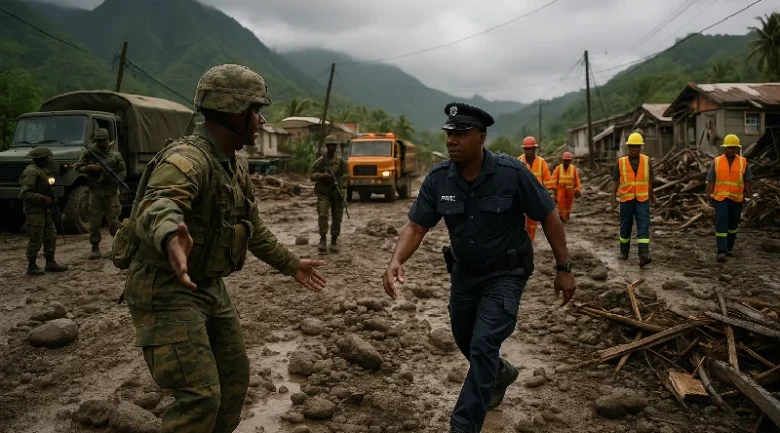
The Disaster Preparedness and Emergency Powers Act of 1987, formally known as the Emergency Powers (Disaster) Act, Chapter 15:03, is Dominica’s foundational legislation that enables the national government to respond swiftly and decisively during natural disasters or states of emergency. Enacted within the constitutional framework of Section 14, this Act grants emergency powers to the President and Cabinet, setting the legal stage for effective mobilisation during crisis events. It remains central to the country’s disaster risk management system.
Purpose, Scope, and Activation
The 1987 Act empowers the President, upon satisfaction that Dominica, or any part of it, is facing or imminently likely to face a disaster such as a hurricanes, flooding, fire, earthquake, epidemic, or other calamity, to proclaim a state of emergency through publication in the Dominica Gazette. Initially valid for up to one month, this proclamation may be renewed with parliamentary approval, ensuring that emergency authority is both controlled and time-bound.
Once activated, the Act authorises the President or appointed officials to issue regulations and orders to secure essentials such as food, water, supplies, medical care, and shelter. It further allows requisitioning private property for public use, enforcing curfews, restricting movement, and even demolishing unsafe buildings or disposing of remains when health and safety demand it. These legal tools enable quick action while maintaining accountability.
Integration with the National Disaster Plan
The Act serves as the legal basis for Dominica’s National Disaster Plan, initially developed in 1987, thoroughly revised in 2001, and due for further updates under the forthcoming Comprehensive Disaster Management Bill. While the Act activates legal authority, the National Disaster Plan operationalises it through a structured emergency management system featuring the National Emergency Planning Organisation (NEPO) and the Office of Disaster Management (ODM).
NEPO, chaired by the Prime Minister, coordinates strategic leadership during emergencies through specialized subcommittees responsible for response, recovery, logistics, and public communications. The ODM executes these plans, maintaining warning systems, logistics, and district-level coordination through Emergency Operations Centres. Together, the Act and Plan form the legal and operational backbone for responding to emergencies at the national and local levels.
Operational Mechanisms and Oversight
When a state of emergency is declared, several authorities come into effect:
- Authority to issue nationwide or localized directives, including restrictions on movement, requisition of property or services, price controls, and regulation of essential supplies. The Act clearly defines when and how such orders should be made.
- Mandatory notification and parliamentary review, requiring that any proclamation must be tabled in the House of Assembly and receive approval should the situation extend beyond one month.
- Defined chain of command, where if the President is unavailable, the Prime Minister, then the Minister responsible for communications, are empowered to act on his behalf.
To ensure transparency, regulations issued under the Act must be published in the Gazette or, when necessary, communicated in other urgent ways. This ensures both awareness and accountability despite the gravity of the circumstances.
Integration with International Disaster Response
While the 1987 Act does not explicitly address international aid coordination, the National Disaster Plan bridges this gap through a dedicated Foreign Assistance Task Force that involves the ODM, Ministry of Foreign Affairs, Dominica Red Cross, customs, immigration, and other agencies. This structure facilitates international assistance in line with global standards, such as the IDRL Checklist, although new CDM legislation aims to strengthen these protocols.
Evolution, Limitations, and Reform Initiatives
Although robust at the inception, the Act’s operational implementation has shown limitations. The National Disaster Plan has often been relied on as the de facto guide to activate emergency procedures, while legal activation under the Act was intermittently delayed during crises like Hurricane Maria (2017). In many cases, aid and logistics were handled on a discretionary basis rather than through formal delegated authority under the Act.
Emerging reforms aim to:
- Clarify legal procedures and thresholds for emergency declarations
- Streamline procurement, customs, and logistics for relief supplies
- Define clearly when and how international assistance enters through national systems
- Integrate digital Emergency Operations Centre (EOC) networks for real-time coordination
A draft Comprehensive Disaster Management (CDM) Bill is currently under consideration to modernize the emergency legal infrastructure, encompassing stages from hazard assessment to aid facilitation and international cooperation.
Strengths, Challenges, and Strategic Outlook
The Disaster Preparedness and Emergency Powers Act provides the foundational authority necessary for swift emergency responses in a disaster-prone nation. It has proven effective in enabling crucial actions such as curfews, property requisitions, and aid distribution. Its close alignment with the National Disaster Plan offers a coordinated governance mechanism for crisis management.
Nevertheless, challenges remain, partly due to operational inertia, bureaucratic complexity, and the lack of updated legal instruments capturing new disaster realities. Reform remains essential to ensure that emergency declarations are timely, integrated, and transparent. Modernizing the legal framework through digitalization, clearer institutional mandates, and international aid integration will enhance Dominica’s capacity to manage disasters in an increasingly complex climate environment.


