

Balisier (Heliconia bihai)
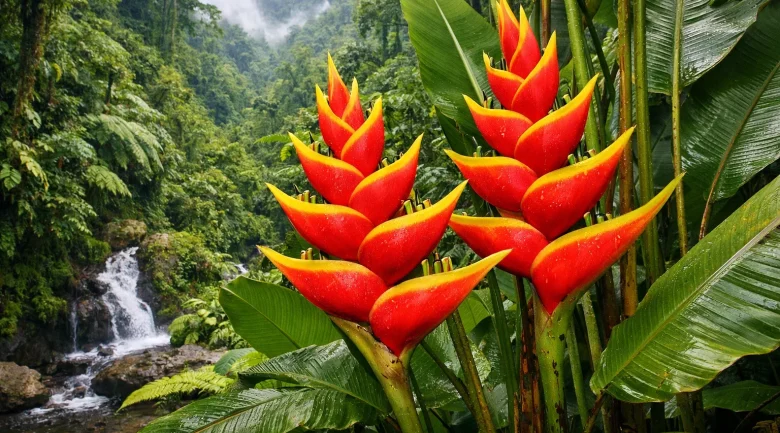
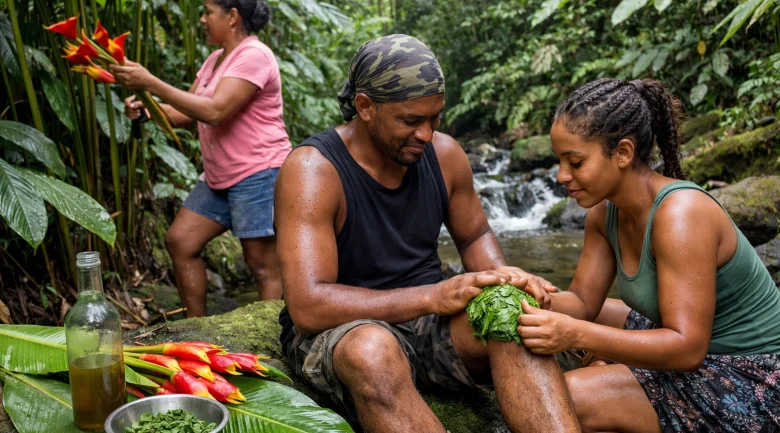
Balisier (Heliconia bihai), also known as Macouba, Lobster Claw or Wild Plantain, is a prominent perennial herb iconic to Dominica’s humid rainforests and mountain valleys. While internationally celebrated as an ornamental flower for its striking red and yellow bracts, in Dominican botanical tradition, the Balisier is valued for its cooling properties and its specific utility in treating physical trauma and inflammation. It is a key species within the island’s high-rainfall zones, particularly in the interior.
Botanical and Geographic Profile
The Balisier is an erect, rhizomatous herb that can reach heights of 3 to 5 meters, characterized by its large, banana-like foliage.
- Morphology: The leaves are long, leathery, and oblong with a prominent midrib. The inflorescence consists of several boat-shaped, waxy bracts that are typically deep red with yellow or green edges. These bracts collect rainwater, creating small aquatic micro-ecosystems.
- Local Habitat: It is an indicator species of the secondary rainforest and thrives in moist, shaded environments. It grows abundantly along the Waitukubuli National Trail and in the foothills of Morne Trois Pitons National Park.
- Nomenclature: In Dominica, the name Balisier is shared with other Heliconia species, but H. bihai is the most recognised for its use as a traditional herbal medicine and utilitarian applications.
Ethnomedicinal Data and Applications
In Dominican bush medicine, the Balisier is primarily used topically to address injuries and localized heat in the body.
| Application | Traditional Use in Dominica | Part Used |
| Anti-inflammatory | Used as a cooling compress to reduce swelling from sprains, bruises, or fractures. | Leaves |
| Dermatological | Applied to “heat rashes” and minor skin irritations to cool the affected area. | Leaves |
| Wound Healing | Fresh leaves are used as a natural bandage to protect abrasions while providing a cooling effect. | Leaves |
| Hydration/Survival | In emergency forest scenarios, the rainwater collected in the bracts (though often containing debris) has been cited as a survival water source. | Bracts |
Technical Analysis and Safety Standards
While the Balisier is less frequently consumed as a tea compared to herbs like Lemon Grass, its mechanical and thermal properties are highly valued in traditional physiotherapy.
- Thermal Regulation: The leaf’s large surface area and waxy cuticle allow it to retain moisture and stay cool against the skin, making it an ideal “biological ice pack” for local practitioners.
- Chemical Composition: Research into Caribbean Heliconias indicates the presence of tannins and flavonoids in the leaves, which contribute to their mild astringent and anti-inflammatory effects when applied topically.
- Safety Profile: The plant is considered safe for external use. However, internal consumption of the water trapped in the bracts is discouraged in modern contexts due to the presence of mosquito larvae and decomposing organic matter.
Utilitarian and Cultural Significance
Beyond medicine, the Balisier leaf serves several practical functions in Dominican rural life:
- Food Preparation: Similar to the Banana leaf, Balisier leaves are used to wrap traditional foods like Ducana or Paime before steaming, though the leaf is typically removed before consumption.
- Shelter: In the heights of the forest, the large, water-repellent leaves have historically been used by hunters and hikers as emergency rain capes or temporary roofing material.
Preparation and Administration
- Cooling Compress: A fresh leaf is harvested and slightly wilted over a low flame to make it more pliable (without destroying its moisture content). It is then wrapped securely around a swollen joint or bruised limb.
- Topical Poultice: For skin irritations, the leaf may be crushed to release its sap before being applied directly to the skin.


References
-
1.
Journal of Medicinal Plants Studies (2015): Medicinal plants of Dominica https://www.plantsjournal.com/archives/2015/vol3issue5/PartC/3-5-15.pdf
-
2.
Medicinal Plant Use in Dominica - Caribbean Study Abroad https://dominica.tamu.edu/wp-content/uploads/sites/54/2017/09/Patel_Megha.pdf