



Alzheimer’s Disease in Dominica
Alzheimer’s Disease in Dominica represents an increasingly critical public health, clinical, and socioeconomic priority across local health and social care sectors. As a progressive neurodegenerative disorder and the primary cause of dementia among older adults, Alzheimer’s disease accounts for an estimated 60 to 70 percent of cognitive decline cases diagnosed throughout national health districts. Disease onset, prevalence, and long-term progression across the island stem directly from the island’s growing elderly population alongside a heavy burden of chronic non-communicable diseases (CNCDs) such as hypertension and Type-2 diabetes.
Managed through the Ministry of Health, Wellness and Social Services, Dominica’s official public response connects local primary care clinics, national tertiary facilities, non-governmental organizations, and essential family caregiving systems. Together, these clinical, demographic, and institutional frameworks define the country’s rapidly evolving dementia care strategy.
Epidemiological Profile and Population Demographics
The epidemiological footprint of Alzheimer’s disease and related dementias in Dominica corresponds directly with the country’s demographic transition. Data from regional health agencies, including the Pan American Health Organization (PAHO) and the Caribbean Public Health Agency (CARPHA), indicate that the Eastern Caribbean is experiencing an accelerated pace of population aging. In Dominica, citizens aged 65 and older represent a growing proportion of the total population of approximately 72,400 residents. Demographic projections suggest that older adults will comprise over 18 percent of the national population by 2040 and approach nearly 25 percent by 2050, establishing Dominica as one of the most rapidly aging societies among the Small Island Developing States (SIDS) in the region.
- Current Prevalence Statistics: Epidemiological estimates compiled by Alzheimer’s Disease International (ADI) indicate that approximately 574 individuals in Dominica are currently living with diagnosed or unrecorded dementia. Because Alzheimer’s disease represents the majority of these cases, it constitutes the dominant neurodegenerative burden among the elderly.
- Long-Term Forecasts: Driven by gains in overall life expectancy and declining birth rates, the total number of individuals living with dementia in Dominica is projected to expand by 74 percent by 2050, bringing the estimated case count to nearly 1,000 citizens. This projection mirrors a broader regional trend across the Caribbean, where dementia cases are expected to increase by 155 percent over the same period.
- Underdiagnosis and Delayed Presentation: Public health clinicians note that official registries capture only a fraction of total cases, particularly in early disease stages. In many local communities, early cognitive impairment, memory loss, and word-finding difficulties are frequently misattributed to normal physiological aging (“old age” or “forgetfulness”), delaying formal medical evaluation until moderate or severe behavioral changes manifest.
- Gender Distribution: In alignment with global epidemiological patterns, women in Dominica exhibit higher overall diagnostic rates for Alzheimer’s disease than men. This disparity is driven primarily by female longevity, as well as distinct biological and neurovascular risk profiles. Furthermore, PAHO reports indicate that women across the Americas account for roughly 66 percent of total deaths attributed to Alzheimer’s disease and other forms of dementia.
Pathophysiology, Vascular Comorbidities, and Risk Factors
At the structural level, Alzheimer’s disease is characterized by neurofibrillary tau tangles and the accumulation of extracellular amyloid-beta plaques within cerebral tissue, leading to widespread synaptic disruption, cortical atrophy, and progressive cognitive decay. While advanced age remains the single greatest non-modifiable risk factor, a complex interplay of modifiable metabolic, cardiovascular, and environmental determinants influences disease onset and progression within the Dominican population.
Vascular Comorbidities and Metabolic Risk
The Caribbean regional health framework highlights a profound connection between vascular health and neurodegenerative decline. Epidemiological data from the Ministry of Health demonstrates high national prevalence rates for metabolic NCDs, including essential hypertension, Type-2 diabetes mellitus, hypercholesterolemia, and obesity. Chronic, poorly controlled hypertension and hyperglycemia damage microvascular networks in the brain, reducing cerebral blood flow and promoting subcortical ischemic changes. In many patients in Dominica, clinical presentations reflect a “mixed dementia” etiology, wherein classical Alzheimer’s neuropathology coexists with vascular brain injury, accelerating cognitive decline and functional impairment.
Cognitive Reserve and Social Determinants
Research into cognitive reserve, the brain’s resilience and ability to improvise neural pathways in response to damage, indicates that early-life educational attainment and lifelong mental engagement serve as protective factors. In older cohorts of Dominican citizens, particularly those raised in rural agricultural communities, historical limitations in access to secondary and tertiary education have been cited by public health researchers as factors that may contribute to lower baseline cognitive reserve, making individuals clinically more susceptible to functional impairment when neurodegenerative changes commence.
Public Health Governance and National Policy Landscape
The governance and administration of healthcare services for Alzheimer’s disease fall within the domain of the Ministry of Health, Wellness and Social Services. However, the policy architecture surrounding neurodegenerative disorders in Dominica remains evolving.
Status of the National Dementia Framework
Dominica currently operates without a dedicated, standalone National Dementia Plan. Regional assessments conducted by Alzheimer’s Disease International (ADI) highlight that only 16 percent of Caribbean nations have established formal national dementia strategies, with most facing significant implementation and budgetary constraints. Through regional advocacy initiatives such as the #WhatsYourPlan campaign, civil society groups and medical professionals continue to advocate for the formal adoption of a national strategy in Dominica. Such a framework aims to prioritize dementia in national budgetary allocations, standardize clinical care pathways, integrate cognitive screenings into routine elder care, and establish continuous data collection systems.
Legal Rights and Social Protections
Legal protections for citizens diagnosed with Alzheimer’s disease are embedded within general civil law, public assistance regulations, and social security frameworks. As cognitive impairment progresses to stages in which self-determination is compromised, family members must navigate legal mechanisms, such as a power of attorney or a judicial application for legal guardianship through the Eastern Caribbean Supreme Court, to manage personal property, financial affairs, and medical consent. Health advocates emphasise the need for modernized legislative instruments specifically tailored to protect vulnerable seniors with cognitive disabilities against financial exploitation, domestic neglect, and unlawful institutionalisation.
Healthcare Infrastructure and Clinical Diagnostic Pathways
The clinical evaluation and ongoing management of individuals exhibiting symptoms of Alzheimer’s disease are delivered through a two-tiered health structure comprising primary community care and centralized tertiary services.
Primary Healthcare Network
Dominica’s primary healthcare model is internationally recognized for its decentralised geographic accessibility. The nation is structured into seven primary health districts: Roseau, Portsmouth, Marigot, Grand Bay, St. Joseph, Castle Bruce, and La Plaine. Operating within these districts are 49 community health centers and polyclinics, staffed by District Medical Officers (DMOs), Family Nurse Practitioners (FNPs), Primary Care Nurses, and Community Health Aides.
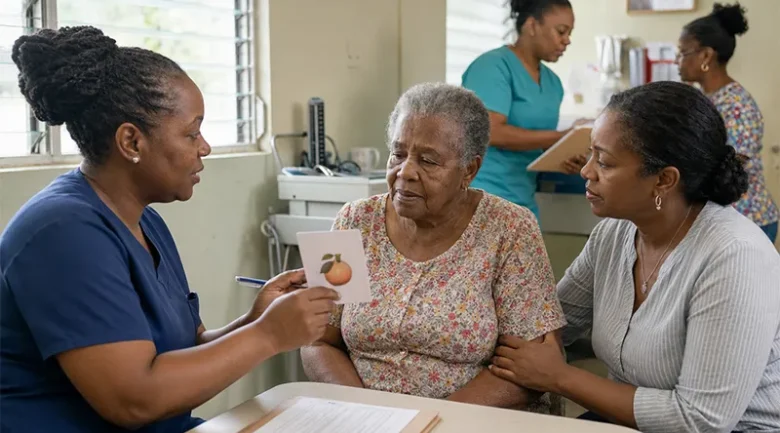
- Initial Screening and Triage: Primary care clinicians represent the first line of defense for detecting cognitive decline. When patients or family members present concerns regarding memory loss, disorientation, or mood shifts, community nurses perform baseline physiological assessments and initial cognitive evaluations.
- Standardized Screening Instruments: Health centers utilize validated cognitive testing tools, including the Mini-Mental State Examination (MMSE) and the Montreal Cognitive Assessment (MoCA), to establish quantitative baselines of memory, orientation, executive function, and language skills.
- Management of Vascular Factors: Primary care centers actively manage co-occurring hypertension, diabetes, and dyslipidemia to minimize vascular risk factors that exacerbate Alzheimer’s progression.
- Community Nursing Outreach: District nurses conduct scheduled home visits to elderly residents, providing direct health assessments for homebound individuals, monitoring medication compliance, and offering guidance to family caregivers.
Tertiary and Specialized Medical Services
When primary care assessments reveal complex diagnostic pictures, atypical neurodegenerative symptoms, or severe psychiatric disturbances, patients are referred to specialized centers in Roseau:
- Dominica China Friendship Hospital (DCFH): As the primary tertiary referral medical facility in the country, the DCFH houses specialized internal medicine, neurology, and radiology services. The hospital provides diagnostic neuroimaging, including Computed Tomography (CT) scanning, to evaluate brain structure, assess cortical atrophy, and exclude reversible causes of cognitive decline, such as subdural hematomas, brain tumors, or normal pressure hydrocephalus. Diagnostic laboratory protocols also screen for metabolic imbalances, thyroid dysfunction, and vitamin B12 deficiency.
- Acute Psychiatric Unit (APU): Located within the DCFH complex, the APU delivers specialized inpatient stabilization for patients experiencing severe Behavioral and Psychological Symptoms of Dementia (BPSD). These symptoms may include acute psychosis, severe agitation, profound sleep-wake cycle disturbances, or severe wandering behaviors that cannot be safely managed in home settings.
- Health Management & Information System (HMIS): The ongoing digital integration of public healthcare records across health centers and the DCFH improves clinical tracking, allowing physicians to monitor diagnostic trajectories and pharmaceutical interventions across primary and tertiary levels.
Non-Governmental Organizations and Community Support
Non-governmental organizations (NGOs) perform an essential role in bridging public service gaps, raising community awareness, and providing direct relief to families navigating neurodegenerative illnesses.
The Dominica Dementia Foundation
The Dominica Dementia Foundation (DDF) is a premier non-profit organization established in 2005. Headquartered in Picard, Portsmouth, the foundation serves as the primary national advocacy body dedicated to advancing dementia care, public education, and patient support across the island. The organization’s core operations center on several strategic areas:
- Caregiver Support and Counseling: Organizing structured support groups, educational workshops, and coping strategies for family caregivers managing the physical and emotional demands of Alzheimer’s care.
- Public Education and Stigma Reduction: Executing nationwide awareness campaigns, public seminars, radio broadcasts, and community outreach programs to reduce social stigma and debunk misconceptions surrounding dementia and mental health.
- Direct Assistance and Care Packages: Providing vulnerable families with essential care items, mobility aids, adult sanitary supplies, and guidance on navigating health and social welfare systems.
- Regional Strategic Advocacy: Collaborating with regional bodies and Alzheimer’s Disease International (ADI) to petition policymakers for formal state action, legislative reforms, and dedicated public healthcare resources.
Institutional Care and Residential Infrastructure
As Alzheimer’s disease advances to late stages, individuals experience profound functional impairment, losing the ability to independently perform basic activities of daily living (ADLs) such as bathing, dressing, feeding, and maintaining personal hygiene. In these stages, continuous 24-hour supervision and physical care become mandatory.
The Dominica Infirmary
Situated in Roseau, the Dominica Infirmary operates as the nation’s principal state-assisted institutional residential facility for the indigent, destitute, and frail elderly. The facility provides long-term residential accommodation, basic nursing supervision, palliative care, and daily assistance to residents, a substantial proportion of whom live with moderate-to-severe Alzheimer’s disease or other forms of dementia. Institutional admission involves comprehensive clinical and social evaluations conducted in coordination with the Ministry of Health to prioritize individuals lacking familial care networks or adequate domestic financial resources.
The Grotto Home for the Homeless
The Grotto Home for the Homeless, located in Roseau, functions as a charitable residential facility providing long-term shelter, physical care, and monitoring for elderly citizens. Funded through a combination of government subventions, private charitable contributions, and community donations, the facility offers a structured living environment for seniors suffering from chronic physical frailty and cognitive impairment.
Private Nursing and Domestic Care
For families possessing greater financial flexibility, private home-care aides and private nursing services are increasingly employed to care for patients within their own homes. However, formal training programs in specialized geriatric care and dementia management for private domestic care workers remain limited, creating variable standards across private care options.
Socio-Economic Impact and Caregiver Burden
The economic, social, and emotional ramifications of Alzheimer’s disease in Dominica extend far beyond the formal healthcare system, creating profound challenges for family units and local communities.
Informal Family Caregiving Dynamics
Dominican cultural traditions strongly emphasize multi-generational family cohesion and domestic eldercare. As a result, the overwhelming majority of individuals living with Alzheimer’s disease are cared for at home by informal family caregivers, predominantly female relatives, including daughters, wives, and granddaughters. Informal caregivers provide hours of continuous supervision, physical assistance, and emotional support every day.
This demanding responsibility frequently leads to high levels of caregiver strain, chronic physical fatigue, clinical anxiety, and depression. The absence of formal, widespread adult day-care facilities or short-term institutional respite services leaves many families without structured relief options.
Economic Consequences
At the household level, managing advanced Alzheimer’s disease imposes severe financial costs. Direct out-of-pocket expenses include purchasing adult incontinence supplies, specialized nutritional supplements, prescription medications, and private home assistance. Furthermore, primary caregivers often face economic trade-offs, being forced to reduce formal employment hours, decline professional promotions, or exit the labor force entirely to fulfill full-time caregiving duties. This dynamic reduces overall household income and diminishes long-term financial security. At the national level, rising dementia rates increase demand on social assistance funds, public healthcare budgets, and pension systems.
Regional Alignment and Strategic Outlook
To prepare for future demographic shifts, health authorities in Dominica collaborate with regional and international public health networks to align clinical standards and operational strategies.
PAHO and CARPHA Frameworks
Through its active participation in the Pan American Health Organization (PAHO) and the Caribbean Public Health Agency (CARPHA), Dominica aligns its public health policies with regional non-communicable disease strategies and healthy aging frameworks. PAHO’s regional strategy on aging advocates for early diagnostic intervention, the integration of mental health into primary care settings, and the training of community health personnel to handle age-related cognitive disorders.
Key Strategic Priorities for Dominica
To effectively manage the projected expansion of Alzheimer’s disease over the coming decades, public health experts and advocacy groups highlight several key structural priorities:
- Formulation of a National Dementia Strategy: Establishing a comprehensive, policy-backed, and fully funded national plan to guide clinical care, research, and resource allocation.
- Expansion of Professional Training: Integrating specialized geriatric and dementia management modules into continuous professional education programs for district doctors, primary care nurses, and home care workers.
- Development of Respite Care Infrastructure: Establishing community-based adult day-care services and temporary respite facilities to relieve informal family caregivers.
- Enhancement of Surveillance and Registries: Standardizing digital data entry within the national Health Management & Information System (HMIS) to track dementia incidence, prevalence, and outcomes accurately across all health districts.
- Community Education and Anti-Stigma Campaigns: Expanding nationwide educational drives in partnership with civil society to encourage early medical consultation and foster dementia-inclusive communities.


References
-
1.
Dominica Observes World Alzheimer's Day on Dominica News Online (DNO) https://dominicanewsonline.com/news/homepage/news/dominica-observes-world-alzheimers-day/
-
2.
Dominica Dementia Foundation UPR Country Report https://upr-info.org/sites/default/files/country-document/2025-04/DDF_UPR47_Dominica.pdf
-
3.
World Health Organization (WHO) Dominica Mortality Database https://platform.who.int/mortality/countries/country-details/MDB/dominica
- 4.