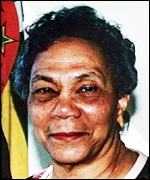




Dominica knows what a courageous Kalinago voice sounds like. We have heard it before. Not long ago, the woman now serving as Kalinago Chief stood firmly in the national spotlight as one of the sharpest critics of the current administration. She carried herself with a confidence that unsettled those in power and energised those who felt the Kalinago Territory had been sidelined for too long. She challenged the office of the Chief before and lost. She was bold enough to accept nomination from the United Workers Party as their proposed President of Dominica. She also publicly alleged that she was offered EC$120,000 by DLP strategists, including Prime Minister Roosevelt Skerrit, along with reinstatement and promotion in the nursing service, on condition that she withdraw from the race. An accusation that, whether proven or not, helped build an image of someone who could not be bought or bullied.
A courageous reputation meeting an uneasy quiet
Then came the decisive pivot. On July 22, 2024, Anette Thomas-Sanford won the Kalinago Chief election with 697 votes, or 58.28% of votes counted, becoming the first woman to hold the office in modern records. She won a clear mandate from the Territory after losing the 2019 chief election and then proving her strength on the national stage as a parliamentary candidate and later as the opposition’s nominee for President of Dominica. That trajectory created a public expectation that, once in office, she would carry the same fearless energy into every major fight that touched Kalinago land, water, and dignity.
Many Dominicans also remember the visibility of her predecessor, Lorenzo Micah Sanford, a Chief who maintained a firm place in public life after his 2019 election win. Whether that presence was driven by his personal style, the political climate of his term, or the balance he struck with central government, it shaped expectations for what the office should look like on the national stage.
It is against that memory, the present feels quieter, and silence in a politically alert society is never neutral. People tend to read it as strategy, constraint, fatigue, or accommodation, and at times it may simply reflect the weight of office showing up in a very human way.
The Chief’s role is not easy, and it is understandable that hearts can soften when responsibility becomes daily reality rather than campaign resolve.
Still, a mandate this strong carries a higher standard of visibility. A leader can be diplomatic and still be unmistakably present, strategic and still sound like the community’s shield. The concern many are expressing is not that she is thoughtful, but that she seems increasingly comfortable allowing the institution to speak while her own voice recedes into the background.
Concord River as a defining test of leadership
The dispute over works affecting the Concord River has turned that gap into a real political problem. The excavation and river disturbance connected to airport-related activity are not abstract policy questions. They affect the health of an important waterway, raise questions about the treatment of protected areas, and directly touch communities that include Kalinago families. In this kind of situation, the office of Chief is not ornamental. It carries both legal authority and symbolic weight.
The Kalinago Council did issue a statement expressing serious concern about the damage to Concord River, warning about the ecological impact and the risks to people who depend on that water. That matters, and it shows that the administration is not completely silent. Yet for many observers, it is not enough. They expected the Chief herself to be visibly at the front of this issue, not only through a collective Council position but also through her own presence in national conversation, media, and direct advocacy with central government. For a leader whose earlier reputation was built on standing up to the state when necessary, the current measured tone feels foreign.
The Concord River situation is exactly the kind of moment where a Kalinago Chief is expected to embody the Territory’s insistence on respect. A formal statement can record a position; a visible Chief can change the balance of attention and pressure. When the Chief stays mostly within the safety of institutional distance, people begin to ask whether the office has tamed the person.
It is not that the community wants constant confrontation. It wants clear ownership of the Territory’s voice at moments where development, environmental risk, and Kalinago rights collide. Concord River has become one of those moments. The Territory will be judged partly on the strength of its institutional response, but the Chief will be judged on whether she seemed fully present.
Balancing human burden with the demands of office
It would be unfair to overlook the responsibility attached to her position, as the Chief has to navigate ceremonial functions, community expectations, constitutional obligations and regular negotiation with central government. The risk of misstep is real. A single statement can strain relationships that are needed to secure funding, infrastructure, or legislative support. The stress shows; anyone watching her closely can sense that the responsibility is heavy.
Yet leadership cannot be reduced to managing pressure, and a Chief who entered office on the strength of her courage cannot allow that courage to fade from view. The community can accept a shift in tone; it cannot easily accept a retreat into near invisibility at the very moment when national projects are shaking confidence and stirring fear.
The burden of office explains the temptation to stay behind institutional language, however it does not erase the obligation to speak clearly and personally when it matters. What the Territory needs now is not a slide back into constant confrontation but a renewed balance. The Council can continue to act as the structured voice of the community, and ministries can still be engaged through formal channels. At the same time, the Chief must step again into the visible centre of that work, because she was elected by people who believed she would not be softened by access to power and who expected her to carry the same spine into the Chief’s chair that she carried into the national political arena.
The Concord River dispute gives her an opportunity to show that those beliefs were not misplaced. If she steps forward with the clarity, strength, and pride that once made her stand out, she can restore confidence not only in her own leadership but in the value of the office itself. If she allows the moment to pass with only muted presence, the Territory will still have a Chief, but it may no longer feel that it has the warrior it thought it had chosen.
This article is copyright © 2025 DOM767