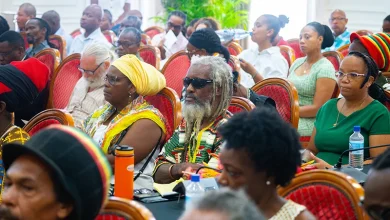
The idea of a cannabis industry in Dominica is exciting, no doubt about that. For many young people, farmers, and small business owners, the announcement of national consultations and frameworks sounds like the door to a new economic future. But before that door is kicked open, we need to slow down and get honest about what’s inside.
Because while the Cannabis Symposium at the State House was packed with positive messaging, there’s still a lot that regular Dominicans haven’t been told.
Cannabis Is Not a Shortcut to Wealth

Several speakers, including Hon. Roland Royer, Minister for Agriculture, highlighted the potential of cannabis to drive economic growth and create jobs. He described a vision where the industry is “inclusive, transparent, and beneficial to all stakeholders.”
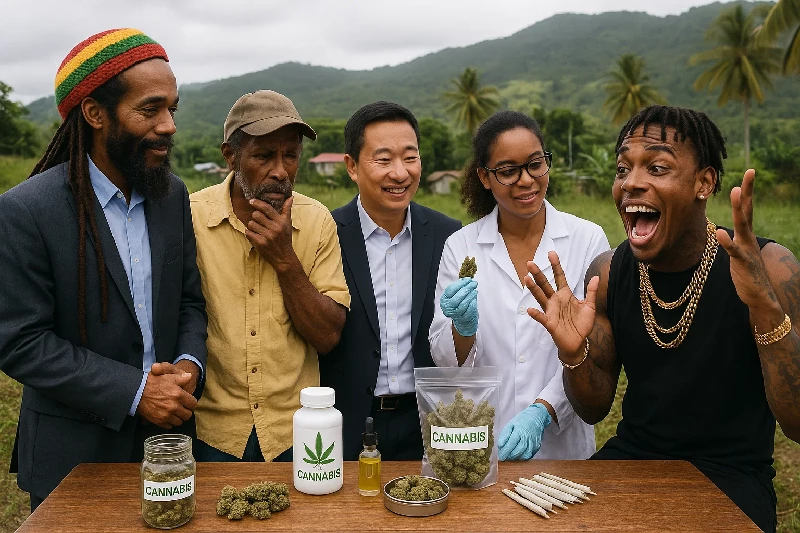
But it’s important for us to understand that the path to cannabis success is not like growing dasheen or plantain. This isn’t a backyard hustle. Cultivating legal cannabis for medicinal export or regulated sale comes with costly standards:
- Seed-to-sale tracking systems
- Lab testing for THC/CBD levels
- Sanitation and pest control
- Security cameras on grow sites
- Packaging, licensing, and proper recordkeeping
Dominicans who want to participate need to ask themselves: Do I have the capital, the land, and the technical support to meet these standards? If not, am I being set up for rejection once licensing begins?
The Law Is Not Ready, And Until Then, Nothing Is Legal
One of the quiet truths of the symposium is that we still don’t have the necessary laws in place. Many speakers referenced pending frameworks, legislation, or regulatory structures. But as of July 2025, there is no public draft bill. That means no licenses, no approved cultivators, and no state-authorized cannabis enterprises.
Brendon Roberts, one of the more grounded voices during the event, made a vital point: if the law does not explicitly protect sacramental users and traditional herbalists, the industry will leave behind the very people who kept cannabis culture alive during decades of criminalization.
This is especially important for young Dominican Rastafari practitioners and herbal medicine users. You cannot participate safely in a legal industry until the law recognizes your right to do so.
Dr. Donald Peters of the Dominica State College raised a long-overdue issue: where is the training? He argued that if Dominicans are to benefit from this new economy, we need structured programmes in cannabis science, marketing, and compliance.
Imagine trying to grow for export markets like Canada or Germany without understanding international phytosanitary standards. That’s not just difficult, it’s a recipe for failure.
Right now, Dominica does not have a cannabis-focused training institute or technical school offering certification. Until that changes, most applicants will be at a disadvantage when competing against better-resourced investors from abroad.
Be Wary of Fast-Talking “Partners”
Let’s also be real: in the coming months, Dominica will see a surge of investors, consultants, and “experts” offering partnerships to locals who own land or have cultivation experience. Some of these will be honest. Others will not.
We’ve already seen how this plays out in other sectors, just look at what happened with the banana industry and citrus industry, once booming but now shadows of themselves, or with seamoss farming, where bold promises outpaced support. Without real safeguards, cannabis risks becoming another missed opportunity in Dominica. The early years bring promises, flashy presentations, and MOUs. But once the money starts to move, it’s often the foreign firms and their attorneys who walk away with the profits.
That’s why Dominicans must be legally protected before signing anything. The Cannabis Licensing Authority, once established, must ensure fair contracts, limits on land leasing, and safeguards for revenue sharing.
It’s Not Just a Cash Crop, It’s a Public Responsibility
One of the missing voices in the symposium was that of public health experts. The talk was heavy on economic opportunity, but light on the risks: youth misuse, addiction, advertising, and misuse of medical claims.
If cannabis is to become a legitimate part of our national economy, Dominicans must treat it with the same responsibility as any medicine or controlled substance. We need:
- Age limits
- Accurate labeling
- Safe product handling
- Consumer education campaigns
And above all, we need real community discussions, not just symposiums at the State House. The cannabis economy could be a game-changer. But only if we’re honest about what it demands, what it costs, and what we must do to be ready. Let’s not trade one kind of exclusion for another.
Dominicans deserve to be more than just excited, we deserve to be prepared.
This article is copyright © 2025 DOM767