
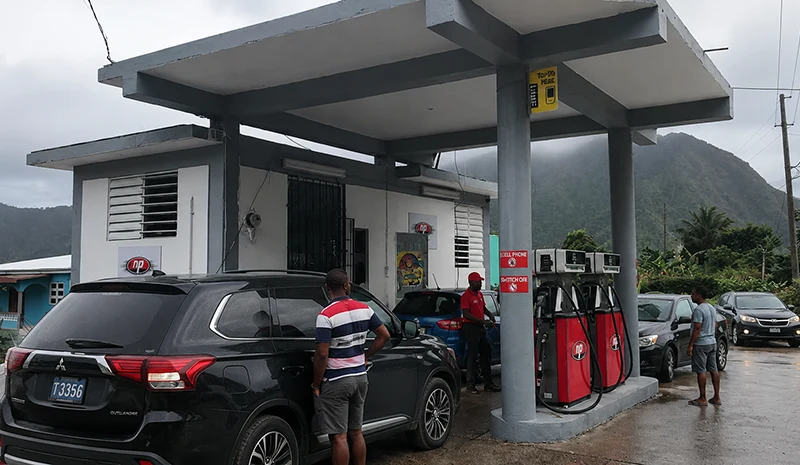
Motorists across Dominica are facing a sharp increase in fuel prices following a new round of petroleum price adjustments linked to the ongoing conflict involving Iran, the United States, and Israel.
The latest pricing structure, which took effect on May 5, 2026, pushed gasoline to EC$17.98 per gallon, while ultra-low sulfur diesel climbed to EC$20.53 per gallon. Kerosene and high-sulfur diesel also recorded significant increases.
Director of Trade Matthan Walter said the increases are tied directly to global instability affecting oil supply routes, refining capacity, and crude oil production.
“These prices, which have increased by 26.7 percent, 33.87 percent, 23.33 percent, and 38.7 percent respectively since the last price change, are premised upon geopolitical tensions, refining limitations, reduction in crude oil outputs globally, strong consumer demand, and disruptions of supply routes,” Walter stated.
Global energy markets have experienced major volatility since the escalation of conflict involving Iran earlier this year, with disruptions linked to the Strait of Hormuz, one of the world’s most important oil shipping routes. International reports indicate that the conflict has contributed to spikes in crude oil prices and fuel shortages across multiple regions.
Prime Minister Roosevelt Skerrit acknowledged the strain being placed on households and businesses, particularly with diesel prices now exceeding EC$20 per gallon.
“To cushion the impact of rising fuel prices, government will be in a position to provide a subsidy of $1.50 to $2 per gallon to reduce fuel taxes by the end of this month,” Skerrit announced during a press conference.
He noted that the subsidy programme could cost government more than half a million dollars monthly, but said the administration recognizes the financial burden being placed on consumers, transport operators, fishermen, and businesses.
Walters also urged Dominicans to take practical measures to reduce fuel consumption, including carpooling, limiting unnecessary travel, and reducing electricity usage where possible. Bus operators considering fare increases were reminded that any adjustments must first be approved through the Transport Board process.
Internationally, analysts continue to warn that energy markets remain unstable as geopolitical tensions persist, with crude oil prices fluctuating sharply amid concerns over supply disruptions and shipping security in the Middle East.
This article is copyright © 2026 DOM767