





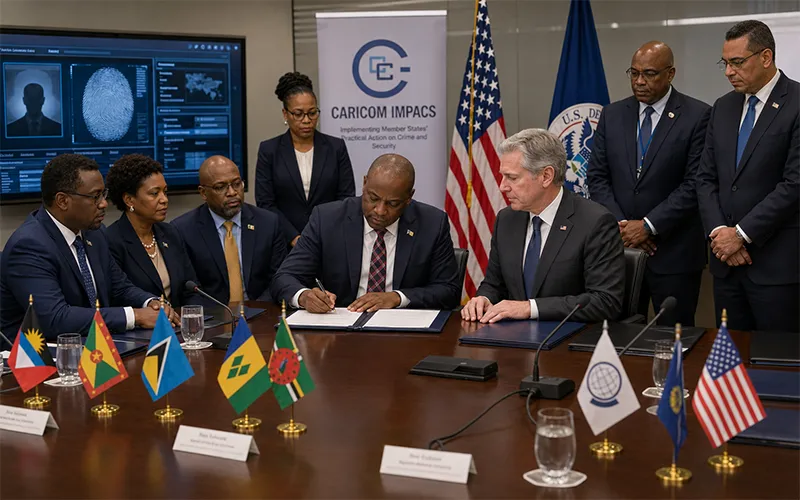
Dominica has joined six other CARICOM member states in signing a landmark agreement with the United States to establish a regional biometric data-sharing framework aimed at strengthening border security, improving immigration screening and enhancing efforts to combat transnational crime.
The Memorandum of Cooperation was signed under the auspices of the Caribbean Community Implementation Agency for Crime and Security (CARICOM IMPACS) during a ceremony in Washington, D.C. Representatives from Dominica, Antigua and Barbuda, Grenada, Saint Lucia, St. Vincent and the Grenadines, St. Kitts and Nevis, along with the Eastern Caribbean Central Bank, participated in the event.
According to information released during the signing, the agreement establishes the first multilateral biometric information-sharing arrangement between the United States Department of Homeland Security and participating CARICOM countries. The system will allow for the automated exchange of biometric data to assist in identifying individuals who may pose immigration, criminal or national security risks.
Officials said the initiative is designed to improve the screening and vetting of travellers while strengthening cooperation between regional governments and United States authorities in addressing cross-border crime and illegal migration.
The agreement is expected to create a common framework through which participating countries can securely exchange biometric information while maintaining established legal and operational safeguards. Authorities believe the system will enhance the ability of immigration and law enforcement agencies to verify identities more efficiently and detect individuals using false or fraudulent identities.
United States officials described the arrangement as an important step toward aligning border security standards between CARICOM member states and the United States, strengthening regional cooperation on migration management and public safety.
The biometric information-sharing platform is expected to become fully operational by the end of 2026, following the completion of technical integration and implementation across participating countries. Once in place, the system is intended to improve the speed and accuracy of border screening while supporting efforts to combat organized crime, human trafficking, terrorism and other transnational security threats.
Dominica’s participation reflects the country’s continued commitment to regional security cooperation and modern border management. Officials say the new partnership will enhance information-sharing capabilities while contributing to safer travel, stronger immigration controls and closer collaboration among Caribbean states and international security partners.
This article is copyright © 2026 DOM767