

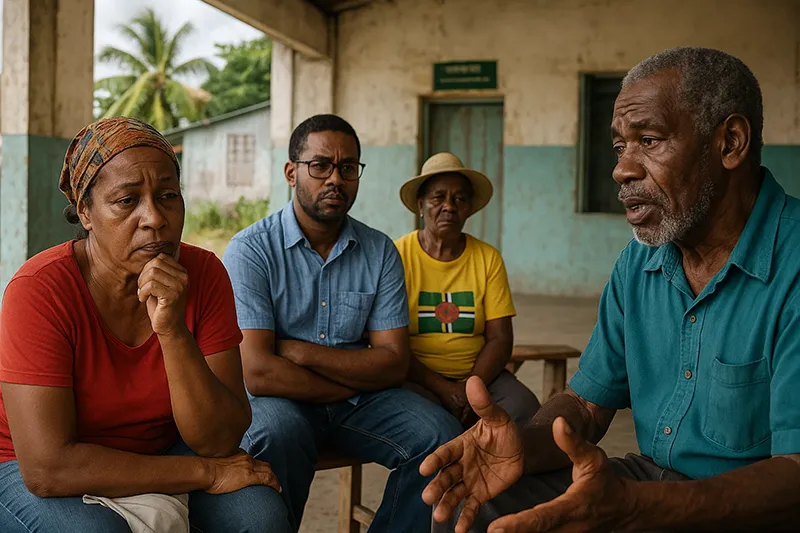
Dominica’s civil society, once vibrant and mobilized, is beginning to show signs of exhaustion, not from lack of interest, but from the crushing weight of dependency on external funding and shifting donor agendas. While the influx of aid has undoubtedly supported crucial development efforts, it has also reshaped the relationship between local NGOs, the communities they serve, and the decision-making structures that guide national progress.
The concern isn’t that donor support exists, it’s how it often dominates the conversation. Many civil society actors now find themselves tailoring their missions to fit the narrow parameters of funding calls, rather than the evolving needs of their own communities. Instead of pushing for bold, locally led solutions, organisations increasingly spend their energy chasing grants, managing external reporting demands, and adapting to international trends, which may not align with Dominica’s unique context.
This imbalance reduces community trust. When residents see organisations shifting priorities frequently or failing to follow through on initiatives once funding ends, the perception of civil society’s relevance begins to erode. Additionally, the overemphasis on technocratic language, terms like “outcome indicators,” “theory of change,” and “scalability”, creates distance between NGOs and the grassroots communities they aim to empower.
Local leaders and advocates also face burnout. Many work long hours for modest pay or on a voluntary basis, motivated by genuine concern for social justice, gender equity, climate resilience, and human rights. But when their calls for institutional support fall on deaf ears, when policy remains unchanged, and when government engagement feels tokenistic, their enthusiasm fades.
What’s needed is a recalibration of how we view and support civil society in Dominica. Donors must prioritize long-term, flexible funding that respects local knowledge and initiative. Government agencies should move beyond ceremonial partnerships and bring CSOs into policy-making processes in a meaningful way. And civil society itself must reflect on how to reclaim its legitimacy, deepen accountability to the people it serves, and resist being steered entirely by external forces.
Dominica’s future depends not just on roads, hospitals, or hotels, but on the ability of its people to organize, advocate, and shape decisions that affect their lives. If civil society is left to wither under the pressure of donor expectations, we lose a vital piece of democratic resilience. The warning signs are clear, it’s time for a shift.
This article is copyright © 2025 DOM767