




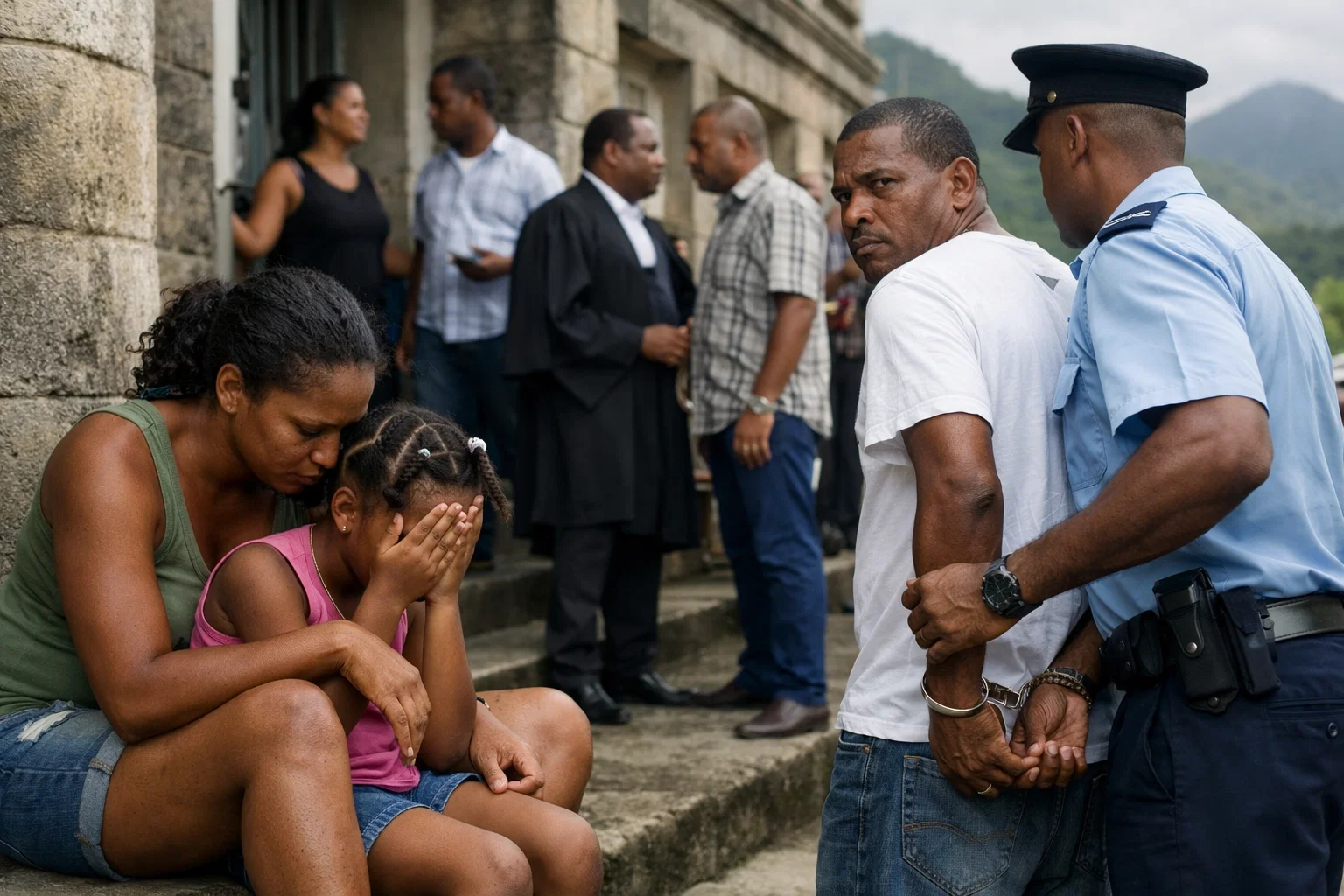

Let me take this from another place entirely, because the way people outside this island sometimes write about issues like this does not reflect how many of us here actually think or talk about them. What happened with that bail decision stirred something deeper than outrage about one case. It touched an old nerve that runs through Dominican society, a nerve built from years of quiet stories, things people heard, suspected, or lived with but rarely saw confronted openly.
When the news circulated that a man accused of molesting a nine-year-old child had been granted bail of EC $30,000 with conditions attached, the legal explanation was straightforward. The man has been charged, not convicted, and the court must operate under the principle that a person is innocent until proven guilty. The magistrate imposed restrictions requiring him to report regularly to the police and to avoid contact with the complainant and witnesses. From the perspective of the law, those steps follow established procedure.
Yet the reaction from ordinary Dominicans has very little to do with procedural logic. It has to do with trust. Or more precisely, the erosion of trust that has been happening slowly for years whenever cases involving children surface and the public feels that the system moves cautiously while the emotional and psychological damage to the victim is immediate and permanent.
One cannot discuss a case like this without confronting the broader cultural landscape around child abuse in Dominica. These matters rarely appear suddenly out of nowhere. In many communities there have always been whispers about certain men, certain households, certain situations that people felt uncomfortable discussing openly. The accused individual might be a respected member of a church, a family acquaintance, a professional person, or someone whose social position makes confrontation difficult. Under those circumstances silence often becomes the easiest path for everyone except the child who has been harmed.
That silence has consequences. It creates an environment where victims feel isolated and where the wider society convinces itself that such incidents are rare when in reality they may simply be hidden. When a case does reach the courts, the public reaction is shaped not only by the facts of that particular case but by years of accumulated frustration with situations that never seemed to reach accountability.
The legal system must, of course, protect the rights of the accused. That is not negotiable in any society that claims to value justice. But it is equally true that societies must continually examine whether their laws and procedures communicate the seriousness of crimes against children. If the public repeatedly perceives that offenders are treated leniently or that cases move too slowly through the courts, the resulting loss of confidence can become as damaging as the crime itself.
Many Dominicans have therefore begun asking difficult questions that go beyond this single case. Should offences involving minors carry stricter pre-trial detention rules? Should the country establish a formal registry for individuals convicted of sexual crimes against children so communities can be aware of those who pose a known risk? Should the courts prioritise these cases so that victims are not left waiting years for resolution while their trauma continues unresolved?
These are policy questions, not emotional outbursts, and they deserve serious national discussion rather than the brief bursts of anger that often dominate talk-radio conversations.
But perhaps the most uncomfortable truth is that the courts alone cannot solve this problem. Laws operate after harm has already occurred. Real protection begins long before that point, in homes where parents listen carefully when children speak, in schools where teachers recognise signs of distress, and in communities willing to challenge respected figures when allegations emerge rather than dismissing them as gossip.
Dominica is a small society, and that closeness can sometimes encourage people to avoid confrontation in order to preserve relationships or reputations. Unfortunately that same instinct can also allow abuse to remain hidden. Until the culture surrounding these matters changes, legal reforms alone will never be sufficient.
The anger surrounding this bail decision therefore reflects something larger than dissatisfaction with a magistrate’s ruling. It reflects a society struggling with the uncomfortable recognition that protecting children requires more than reacting once a crime has reached the courtroom. It requires vigilance, honesty, and a willingness to confront difficult truths even when the accused person is someone familiar.
This article is copyright © 2026 DOM767