





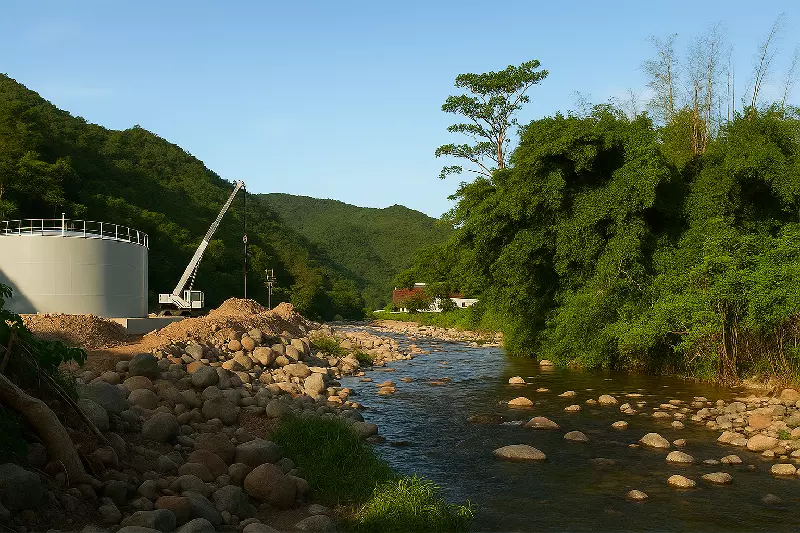
A longstanding environmental concern has resurfaced in Belfast, Dominica, where Father Franklin Coffey has publicly denounced a private development allegedly blocking public access to the Belfast River. Speaking on a radio program this week, Father Coffey described the obstruction as violating environmental stewardship and local community rights.
The river lies within a legally designated buffer zone and has long been a site for public use, spiritual reflection, and ecological observation. Coffey explained that he had previously informed the relevant authorities about the construction and the need to uphold public riverbank access. “They promised to take action,” he said, “but instead, a metal gate now blocks the path and the vegetation along the bank has been bulldozed.”
The situation raises broader questions about enforcing environmental regulations, particularly in areas where private land ownership intersects with national conservation policy. Buffer zones are legally mandated to protect fragile ecosystems and ensure public access to natural resources. When enforced correctly, they are meant to prevent precisely the restriction now reported at Belfast.
Coffey also noted that this is not just a matter of personal frustration, but part of a broader issue concerning how land-use decisions are made and whether Dominica’s laws are applied equally, regardless of an individual’s economic or political connections.
Environmental advocates call on the Ministry of Environment and the Physical Planning Division to intervene, conduct an immediate inspection, and determine whether the development complies with Dominica’s planning laws and buffer zone regulations. The broader public continues to watch the case closely, viewing it as a litmus test for transparency, environmental justice, and community rights.
This article is copyright © 2025 DOM767