



Sorrel in Dominica
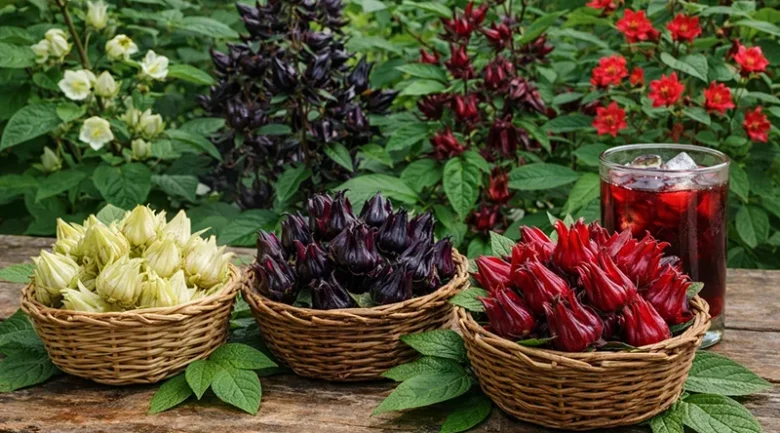
Sorrel (Hibiscus sabdariffa), also known globally as Roselle, is a tropical shrub in the Malvaceae family that holds immense cultural and seasonal importance in Dominica. While the plant grows year-round in tropical climates, in the Dominican context, it is associated with the Christmas season and end-of-year festivities. The deep red, fleshy calyces of the sorrel plant are the primary ingredient in the island’s most iconic traditional holiday beverage.
Botanical Description and Varieties
Sorrel is an annual or perennial herb or sub-shrub, typically reaching heights of 1.5 to 2.5 meters. Reddish stems and lobed green leaves with red veins characterise it.
- The Flower and Calyx: The plant produces pale yellow flowers with a dark red eye. Once the flower falls away, the sepals (calyces) enlarge, become succulent, and turn a brilliant deep crimson. This thickened calyx is the part harvested for consumption.
- Varieties in Dominica: Two main types are commonly found on the island. The most popular is the Dark Red or Black Sorrel, favoured for its intense pigmentation and tartness. A less common White Sorrel (or Green Sorrel) variety also exists; it possesses a milder, more acidic citrus-like flavour and produces a clear or pale green extract, though it lacks the festive visual appeal of the red variety.
Seasonal Cultivation and Habitat
In Dominica, sorrel is a photoperiod-sensitive plant, meaning its flowering is triggered by the shortening of days.
- Planting Cycle: Farmers and backyard gardeners typically plant sorrel seeds between August and September. This timing ensures the plant reaches maturity just as the short days of December arrive, triggering a massive bloom in time for the Christmas harvest.
- Growing Conditions: Sorrel thrives in the well-drained, fertile volcanic soils of Dominica. It is highly drought-tolerant but performs best with the consistent rainfall found in the foothills and small farms of parishes like Saint George, Saint Paul, and Saint Patrick.
- Harvesting: The calyces are hand-picked once they are firm and fleshy. Harvesting usually peaks between late November and early January.
Culinary and Cultural Significance
The primary use of sorrel in Dominica is the production of Sorrel Juice, a vibrant, spiced infusion that is a staple at every Dominican Christmas table.
- Traditional Preparation: The fresh or dried calyces are steeped in boiling water along with traditional Dominican spices, including ginger, clove, cinnamon (spice) sticks, and sometimes dried orange peel. After steeping, the liquid is strained, sweetened with cane sugar, and chilled.
- Sorrel Shandy and Wine: Beyond the standard juice, sorrel is often fermented to create “Sorrel Wine” or mixed with local beer to create a “Sorrel Shandy.
- Preserves: The high pectin content of the calyces makes them ideal for jams and jellies, which are increasingly produced by agro-processors in villages such as Bellevue Chopin.
Medicinal and Nutritional Benefits
In Dominican herbal medicine, sorrel is valued for more than its flavour. It is recognised by the Ministry of Health as a nutritionally dense super-food.
- Antioxidants: The deep red color comes from anthocyanins, which are powerful antioxidants.
- Vitamin Content: It is exceptionally high in Vitamin C, riboflavin, and minerals like calcium and magnesium.
- Traditional Remedies: Locally, sorrel tea is used as a mild diuretic and is traditionally believed to help lower the pressure (hypertension) and improve circulation.
Market Availability and Pricing
Sorrel is a high-demand seasonal commodity. During the Christmas rush, it is a dominant feature at the Roseau Market and the Portsmouth Market.
- Fresh Sorrel: Usually sold by the heap or by the pound. Prices can range from $5.00 EC to $10.00 EC per pound, depending on the harvest’s abundance and proximity to Christmas Day.
- Dried Sorrel: To provide year-round availability, many farmers dry the calyces. Dried sorrel is sold in plastic packets in supermarkets like Whitchurch and Astaphans for approximately $8.00 EC to $12.00 EC.
- Bottled Concentrates: Local agro-processors produce sorrel concentrates and syrups, allowing Dominicans in the diaspora or those out of season to enjoy the drink year-round.


References
-
1.
Dominica Gourmet - Dominican Mule Recipe https://dominicagourmet.com/dominican-mule-drink-with-sorrel/
-
2.
Discover the National Drink of Dominica: Sorrel Drink https://nationalfoods.org/recipes/discover-the-national-drink-of-dominica-sorrel-drink/
-
3.
Andrews Memorial Hospital - Health Benefits of Sorrel https://amhosp.org/health-tips/health-benefits-of-sorrel/
-
4.
Healthline - Nutrients and Benefits https://www.healthline.com/nutrition/sorrel-benefits
-
5.
Dominica Food & Drink Guide https://www.facebook.com/FoodandDrink.Dominica/posts/1268088088664740/