

Roseau Town Board
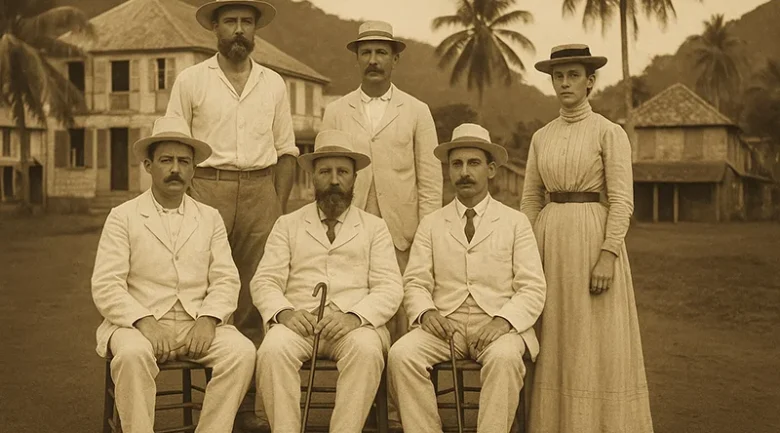
The Roseau Town Board was established in 1869 under British colonial rule as the first formal municipal authority in Dominica’s capital. Its creation marked a turning point in the island’s urban governance, giving the capital a local body responsible for managing sanitation, drainage, public health, and infrastructure. At the time, Roseau was a growing port town with increasing administrative significance, and the colonial administration saw the need for a more structured civic framework to manage the town’s services.
The Board was composed of both elected members and government appointees. It operated under ordinances issued by the colonial governor, and its early responsibilities included maintaining public order, managing waste and latrines, and overseeing town planning at a basic level. Despite limited financial autonomy, the Board was one of the earliest examples of local representation in Dominica.
Transition to the Roseau City Council
A major development came in 1937 with the Local Government Ordinance, which reconstituted the Roseau Town Board into a corporate municipal body. This legal change granted it greater powers and responsibilities, including the authority to levy taxes, hire staff, and manage public services more independently. It also introduced a more formalized structure of governance, with defined roles for a Chairman, later evolving into the Mayor of Roseau.
This transition laid the foundation for what is now known as the Roseau City Council, which continues to function as the capital’s main local authority. While the title and structure have evolved, the Roseau Town Board remains a critical part of Dominica’s civic history, representing the first formal attempt to decentralize administrative control in the country’s urban centers.


