



Fresh Produce Export Quality Control Act of Dominica
The Fresh Produce Export Quality Control Act (Act No. 2 of 2009) is a legislative framework designed to regulate, monitor, and promote the export of fresh produce from Dominica by establishing licensing, packing-house registration, inspection, packaging, labelling, and appeals mechanisms.
Objectives & Purpose
The Act primarily aims to ensure that fresh produce exported from Dominica meets defined quality, safety, and standardisation criteria, thereby strengthening market access, maintaining consumer confidence abroad, and integrating Dominican agricultural exporters into international trading systems. To achieve this, the Act provides for the establishment of a regulatory authority, the licensing of exporters, the registration of packing houses, the inspection of produce, packaging and labelling requirements, sanctions for non-compliance, and an appeals tribunal.
Main Provisions
Key features of the Act include:
- Authority Establishment: Under section 3, the Dominica Bureau of Standards (DBOS) is designated as the “Fresh Produce Export Quality Control Authority”.
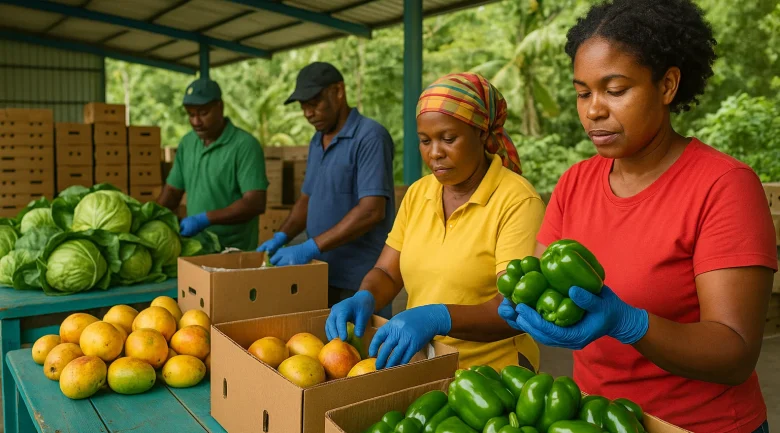
- Licensing of Exporters: Section 8 mandates that no person may export fresh produce unless the exporter holds a valid licence, the produce has been cleaned, graded, packed in a registered packing house, and inspected, and it conforms to the standards.
- Packing House Registration: Sections 21-24 set out requirements for premises to be registered as packing houses; only registered packing houses may prepare produce for export.
- Packaging and Labelling: Sections 34-35 impose conditions on the packaging and labelling of fresh produce, including requirements for marking and labelling, and a prohibition on tampering with certified packaging.
- Inspection and Export Controls: Sections 37-45 detail inspection processes prior to export, application for inspection, rejection of non-conforming produce, entry by inspectors into premises, detention of goods, and obstruction offences.
- Appeals Mechanism: Part VII (sections 46-48) establishes the Fresh Produce Appeals Tribunal, enabling exporters, pack-house owners or others to appeal decisions of the Authority (e.g., licence refusals, suspensions, registration cancellations).
- Regulations and Fees: Section 50 empowers the Minister for Agriculture to make Regulations for record-keeping, destination control, registers, fees and other administrative matters. The accompanying Regulations (S.R.O. 30 of 2012) implement these provisions.
Implementation & Institutional Role
The Dominica Bureau of Standards, as the appointed Authority, administers the Act through its National Certification Unit and Inspection Unit, overseeing licensing, certification, inspection and audits of fresh-produce exporters and packing houses.
The regulatory framework became particularly relevant given Dominica’s efforts to diversify agricultural exports beyond bananas and to respond to heightened market requirements for hygiene, traceability, and certification in regional and extra-regional markets.
Significance for Dominican Agriculture
The Fresh Produce Export Quality Control Act is a critical pillar in Dominica’s agricultural export infrastructure. Its significance includes:
- Facilitating access to new or existing export markets by demonstrating that Dominican produce meets recognised quality, safety and packaging standards.
- Strengthening value-chain governance: by licensing exporters and registering packing houses, the Act promotes transparent, accountable processing, reducing the risk of consignment rejection abroad.
- Supporting diversification: as banana production has declined, other crops (pineapple, mango, root crops, and vegetables) require export-quality standards. The Act provides the regulatory backbone.
- Enhancing small-farm integration: Indirectly, the Act encourages growers, pack-houses, and exporters to collaborate, align practices, and adopt standards, thereby potentially raising incomes and sector resilience.
Challenges & Future Considerations
While the Act provides a robust legal structure, practical challenges remain:
- Ensuring rural growers, small pack-houses and informal exporters meet licensing, registration and inspection requirements can be resource-intensive.
- Investment in infrastructure (modern packing houses, cold chain, traceability systems) is required to fully leverage the Act’s provisions.
- Extension and training for farmers and pack-house operators in the normative and operational demands of the Act must be maintained.
- Continued adaptation of standards and certification processes to evolving international market demands (e.g., organic, fair-trade, digital traceability) will test institutional capacity.
- Given Dominica’s vulnerability to natural disasters, regulatory infrastructure must be resilient and adaptive to disruptions (hurricanes, flooding) that could interrupt the supply of produce, packing, or export readiness.


