

Dominica Centenarian Study
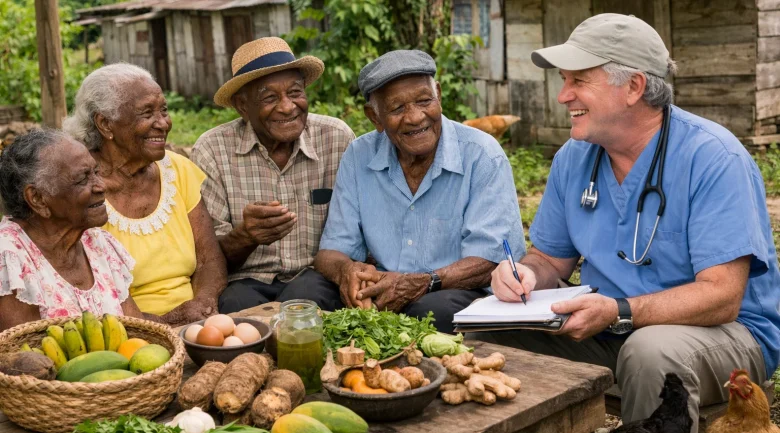
The Dominica Centenarian Study, primarily spearheaded by Dr. Noel Boaz and his colleagues at the Ross University School of Medicine in the early 2000s, remains the most authoritative scientific review of the island’s extraordinary longevity. While many global studies focus on high-tech medical interventions, the Dominica study is unique because it examines a natural laboratory of ageing where modern sedentary habits had not yet taken root.
Background and Methodology
The study was initiated as a multi-year (2001–2004) retrospective and prospective cohort analysis. Researchers aimed to validate the ages of individuals claiming to be 100 or older and to identify the environmental, genetic, and lifestyle factors responsible for such a high prevalence. At the time of the primary census, Dominica reported 22 confirmed centenarians in a population of approximately 72,000. This yielded a prevalence of 3.02 per 10,000, more than three times the average in the United States and the United Kingdom.
The Lifestyle Hypothesis: Movement as Life
One of the most significant findings was the rejection of the idea that genetics alone was the driver. Dr. Boaz and his team noted that the current centenarian cohort grew up in a pre-modern era. Until the 1960s, Dominica’s infrastructure was limited; daily life required rigorous physical exertion.
- Topographical Resistance: The island’s volcanic, mountainous terrain turned every trip to the market or garden into a high-intensity cardiovascular workout.
- Agricultural Longevity: Many subjects were active farmers well into their 90s. The study highlighted that retirement was a foreign concept to this generation, allowing their musculoskeletal and metabolic systems to function far longer than those of their peers in developed nations.
Nutritional Purity: The Ground Provisions Model
The study meticulously documented the subjects’ dietary habits. The traditional Dominican diet was identified as a core pillar of health.
- Dietary Composition: The diet consisted largely of ground provisions (yams, dasheen, sweet potatoes), fresh fish, and fruit.
- Absence of Toxins: Unlike modern diets high in processed sugars and preservatives, the centenarians consumed food they grew themselves.
- Herbal Medicine: The use of bush teas (infusions of lemongrass, soursop leaves, and peppermint) was ubiquitous. Researchers hypothesised that these provided a steady intake of antioxidants and anti-inflammatory compounds.
The Social and Psychological Pillar
Currently, psychologists looking back at the study point to the social integration of the Dominican elderly as a protective factor against cognitive decline.
- Multigenerational Living: Centenarians were rarely isolated. They lived in homes with children, grandchildren, and great-grandchildren, providing them with a constant sense of purpose and social stimulation.
- Personality Traits: Comparative analysis showed that Dominican centenarians often exhibited high scores in conscientiousness and extraversion, traits linked to lower stress levels and better health-related behaviours.
Validation and the Case of Ma Pampo
A major segment of the study was dedicated to age validation. This proved difficult because many original records were destroyed by fire or the 1979 Hurricane David. The most famous case, Elizabeth “Ma Pampo” Israel, who claimed to be 128, served as a focal point. While her age could not be scientifically verified to the standards of the Guinness World Records, the study concluded that, even excluding her, the island’s high concentration of centenarians was statistically undeniable and not due to age heaping or data errors.
Future Outlook and Conclusions
The study ended with a sombre warning: the centenarian boom in Dominica is likely a one-generation phenomenon. Currently, the shift toward a Western lifestyle, imported processed foods, sedentary jobs, and increased vehicle use is already associated with a decline in metabolic health among younger Dominicans. Dr. Boaz predicted that as the old guard passes away, the prevalence of centenarians may drop to match global averages unless traditional lifestyle habits are consciously preserved.


References
-
1.
xtreme Longevity in Dominica: A Population Study (Noel Boaz et al.) https://www.slideserve.com/HarrisCezar/extreme-longevity-in-dominica
-
2.
WHO Health Profile: Dominica https://www.who.int/countries/dma/
-
3.
Determinants of Mental Ability on a Caribbean Island, and the Mystery of the Flynn Effect. https://www.researchgate.net/publication/234111905_Determinants_of_Mental_Ability_on_a_Caribbean_Island_and_the_Mystery_of_the_Flynn_Effect