




Brown Pelican
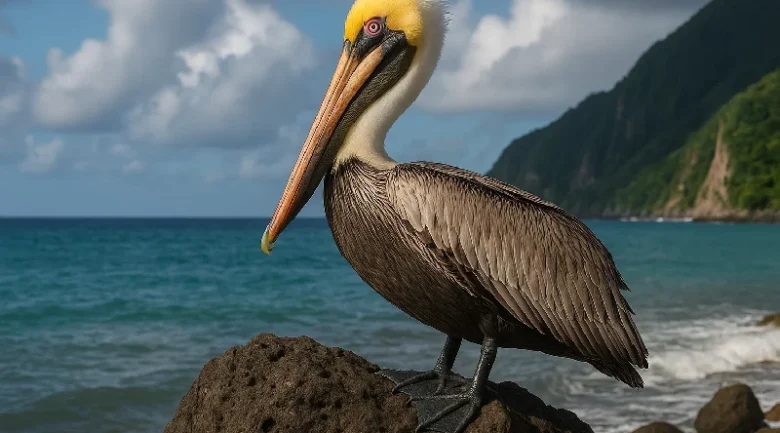
The Brown Pelican (Pelecanus occidentalis) is a familiar sight along Dominica’s coastline, especially on the west coast, where the calm Caribbean sea makes for ideal feeding conditions. This large seabird is easily identified by its long bill, throat pouch, and distinctive brown-and-grey plumage, often contrasted with a pale head during the breeding season. Known for its spectacular plunge-diving technique, it soars low over the sea before dropping suddenly into the water to scoop up prey.
Habitat, Diet, and Behaviour of Brown Pelicans
In Dominica, Brown Pelicans are frequently observed in coastal communities such as Portsmouth, Mahaut, Roseau, and Layou, as well as around sheltered bays and fishing villages where small fish are plentiful. They often rest on piers, boats, or rocky outcrops, and are social birds, gathering in small flocks.
Their diet mainly consists of Dominican fish species like sprats, sardines, anchovies, and small mackerel. Working alone or in loose groups, they use their expandable throat pouch to capture fish, draining the seawater before swallowing their catch. Pelicans sometimes follow fishing boats to feed on discarded fish, creating a link between the species and local fisheries.
Nesting typically occurs on isolated coastal cliffs or small offshore islets, with both parents sharing incubation duties. Chicks are fed regurgitated fish until they learn to fish on their own. Brown Pelicans are non-migratory in Dominica, remaining year-round, and play an important role in the coastal ecosystem by helping regulate fish populations.
Their presence along the west coast and in traditional fishing areas makes them a regular part of Dominican coastal life, offering birdwatchers and residents alike a dynamic glimpse into the island’s marine biodiversity.


