

Abortion in Dominica
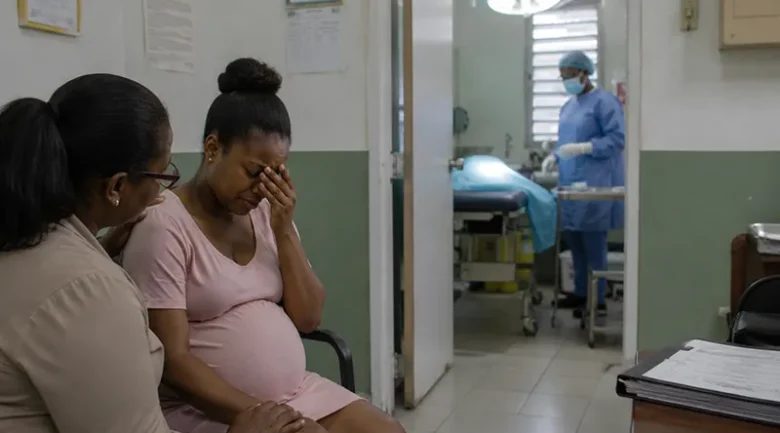
Abortion in Dominica is governed by restrictive historical legislation that criminalises the voluntary termination of pregnancy under all circumstances. While the legal framework establishes strict punitive measures, the issue intersects with public health challenges, socioeconomic realities, cultural traditions, and child welfare dynamics. In recent years, the status of reproductive healthcare and the absolute ban on abortion have become subjects of constitutional scrutiny and civic debate.
Legal Framework and Punitive Measures
The primary legislation governing the termination of pregnancy is the Offences Against the Person Act, Chapter 10:31, which originates from 19th-century colonial law (specifically modeled after the English Offences Against the Person Act of 1861).
Under Sections 56 and 57 of the Act, it is a criminal offence to unlawfully procure a miscarriage:
- Section 56: Focuses on the pregnant woman who, with intent to procure her own miscarriage, unlawfully administers to herself any poison or other noxious thing, or unlawfully uses any instrument or other means whatsoever. It also applies to any person who assists or performs the procedure.
- Section 57: Criminalizes the supplying or procuring of any poison, noxious thing, or instrument knowing that it is intended to be unlawfully used with intent to procure the miscarriage of any woman.
The law does not contain explicit statutory exceptions for cases of rape, incest, or severe fetal impairment. While common law principles derived from the British precedent R v Bourne (1939) technically permit a medical defense if the life or health of the mother is in grave danger, this exception is not explicitly codified in Dominica’s statutes.
The 2024 Constitutional Challenge
In April 2024, the absolute prohibition of abortion faced a direct legal challenge in the Eastern Caribbean Supreme Court. In the case AB et al v Attorney General of the Commonwealth of Dominica, the claimants, consisting of a woman of reproductive age and a practising medical doctor, filed a motion challenging the legality of Sections 56 and 57 of the Offences Against the Person Act.
The motion argues that the current law contravenes constitutional protections, including:
- The right to family life and privacy.
- Freedom of conscience.
- Protection against discrimination on the grounds of sex.
- Protection from inhumane or degrading treatment.
The claimants seek declarations that the provisions are unconstitutionally vague and null, void, and of no effect under the Constitution of the Commonwealth of Dominica.
Common-Law Exemptions and Medical Exceptions
While the text of the Offences Against the Person Act presents a broad prohibition, Dominica’s legal system integrates narrow common-law exceptions that shield certified medical professionals from prosecution under specific clinical circumstances.
The Bourne Precedent
Dominica’s judicial system relies heavily on the landmark English common-law precedent Rex v. Bourne (1939). This ruling established that an abortion is not “unlawful” if performed in good faith by a certified physician to save the life of the pregnant individual or to prevent severe, permanent injury to her physical or mental health.
Because this interpretation is integrated into Dominica’s legal system, local courts evaluate the legality of a medical termination based on whether the attending physician acted to avoid a serious medical crisis.
Late-Term Child Destruction Parameters
Sections 8 and 9 of the Act introduce specific legal parameters for pregnancies that have reached 28 weeks or more. At this stage, the charge shifts from standard abortion to the felony of “child destruction.”
The statute outlines an explicit exception for late-term interventions, protecting medical professionals from prosecution if the procedure is performed solely to preserve the life of the mother.
Public Health Data and Reproductive Context
Because induced abortion remains clandestine due to its illegal status, precise administrative figures on the total number of terminations performed annually in Dominica are limited. Public health researchers rely on wider regional indicators and local contraceptive access metrics to assess the reproductive landscape.
According to data tracked by global health repositories, Dominica faces distinct gaps in institutional reproductive health frameworks:
| Metric Indicator | Published Figure / Status | Source Reference |
| Adolescent Birth Rate | 49 births per 1,000 girls (Ages 15–19) | Global Contraception Policy Atlas (2025) |
| Modern Contraception Prevalence | 46% among women aged 15–49 | Global Contraception Policy Atlas (2025) |
| Contraceptive Demand Satisfied | 78% utilizing modern methods | Global Contraception Policy Atlas (2025) |
| Public Sector Funding | No direct funds for public procurement | Ministry of Health Assessment |
The Ministry of Health, Wellness and New Health Investment primarily provides male condoms through public clinics. The procurement, distribution, and subsidization of alternative contraceptive methods (such as oral pills, injectables, and IUDs) are managed almost exclusively by civil society organizations, most notably the Dominica Planned Parenthood Association (DPPA).
Cultural and Socio-Religious Attitudes
The societal perspective on abortion in Dominica is heavily influenced by deep-seated religious traditions and conservative cultural norms. The population is predominantly Christian, with the Roman Catholic Church and various Evangelical denominations maintaining significant institutional and moral influence over public opinion and state policy.
Religious groups consistently advocate for the “sanctity of life” from conception, viewing abortion as a violation of fundamental moral laws. This stance strongly reinforces the social stigma surrounding unplanned pregnancies and clandestine terminations.
Conversely, public health advocates and legal reformers highlight the hidden costs of this stigma. Clandestine abortions, often performed using illegally acquired pharmaceuticals like misoprostol or via unsafe informal methods, expose women to risks of incomplete abortion, heavy hemorrhaging, and systemic infections. Fear of prosecution or societal judgment frequently delays women from seeking necessary post-abortion care at public hospitals.
International Monitoring
Dominica’s restrictive legal framework draws regular scrutiny from international human rights organizations and treaty monitoring bodies.
Human Rights Committee Findings
In 2020, the United Nations Human Rights Committee, which monitors compliance with the International Covenant on Civil and Political Rights (ICCPR), reviewed Dominica’s legal framework.
The Committee noted the government’s explanation that criminal penalties are rarely pursued in modern judicial practice. However, it expressed serious concern that keeping these laws active could force women and girls into unsafe, clandestine conditions that endanger their lives.
United Nations Recommendations
International bodies consistently urge Dominica to modernize its penal code to align with global human rights standards. The UN Human Rights Committee, alongside recommendations from the Committee on the Elimination of Discrimination against Women (CEDAW), has formally called on the state to:
- Decriminalize Termination: Remove all criminal penalties for women who undergo abortions and the healthcare providers who assist them.
- Expand Legal Grounds: Introduce clear statutory exceptions for pregnancies resulting from rape or incest, or cases involving severe fetal abnormalities.
- Ensure Safe Access: Establish transparent public health guidelines that guarantee access to safe, legal medical terminations and comprehensive post-abortion care across all health districts.
Socioeconomic Impacts and Child Welfare
The restriction of abortion services directly intersects with broader developmental challenges in Dominica, specifically regarding poverty, teenage pregnancy, and child welfare.
The Cycle of Adolescent Motherhood
With an adolescent birth rate of 49 per 1,000 girls, early childbearing remains a critical socioeconomic factor. Unintended pregnancies frequently interrupt secondary and tertiary education for young women. Statistical analyses across the Caribbean basin demonstrate a high opportunity cost for early motherhood, including:
- Reduced long-term participation in the formal labor market.
- Increased dependency on informal, low-wage employment sectors.
- Higher rates of intergenerational poverty affecting the children of adolescent mothers.
Institutional Support and Structural Strain
When restrictive legal frameworks result in unwanted or unsustainable births, the structural burden shifts to national social safety nets. The Social Welfare Division and community-based organizations handle issues stemming from child neglect, abandonment, and economic deprivation. In instances where parents lack the financial means or psychological readiness to raise children, state systems experience increased demand for foster care, maintenance enforcement, and public assistance allowances.


References
-
1.
Dominica Offences Against the Person Act https://www.dominica.gov.dm/laws/chapters/chap10-31.pdf
-
2.
Global Abortion Policies Database https://abortion-policies.srhr.org/country/dominica/
-
3.
Abortion Status in the Caribbean via Rutgers International https://rhrntools.rutgers.international/wp-content/uploads/2020/11/Abortion-status-in-the-Caribbean-Final.docx