




The recent positive assessment from the International Monetary Fund has been presented as confirmation that Dominica is on a stable and improving economic path. On the surface, the indicators appear encouraging. Real GDP growth is reported at 4.5 percent in 2025, inflation has eased, and the financial system is described as stable and liquid. These are important signals, particularly in a small, shock-prone economy.
However, a closer reading of the IMF assessment suggests that headline growth figures require careful interpretation, as they do not necessarily indicate structural strength when driven by narrow, externally influenced factors.
Growth Driven by Recovery, Not Transformation
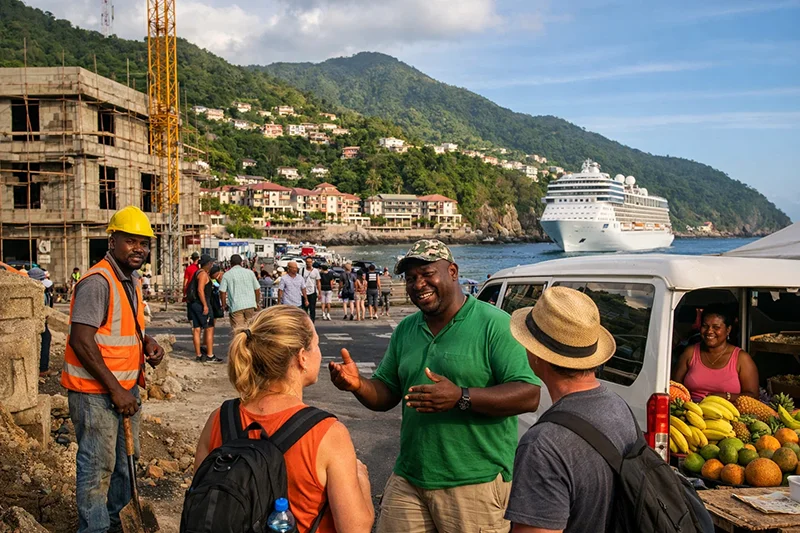
A significant portion of the reported growth is attributed to the recovery in tourism and the continuation of large-scale public investment projects. This distinction is critical. Tourism recovery, particularly following global disruptions, represents a return to prior levels of activity rather than the creation of new economic capacity. Moreover, much of the recent tourism expansion has been supported by cruise arrivals, which typically generate lower per capita spending and weaker linkages across the domestic economy compared to stay-over visitors.
Similarly, infrastructure development, including the international airport project and other public works, contributes to short-term economic expansion through construction activity and related services. While these investments are necessary and potentially transformative, their immediate impact is temporary. Once completed, the growth contribution diminishes unless sustained by private-sector development and diversification.
This raises an important question: to what extent is current growth reflective of long-term structural change rather than cyclical recovery and state-led investment?
Persistent Fiscal Vulnerabilities
The IMF’s broader assessment continues to highlight Dominica’s elevated debt levels, which remain close to 100 percent of GDP. This is not a marginal issue. High public debt constrains fiscal flexibility and increases vulnerability to external shocks, particularly in a country exposed to natural disasters and global economic fluctuations.
Dominica’s classification as high risk of debt distress validates this concern. While fiscal consolidation efforts and revenue measures are being discussed, progress in reducing debt to more sustainable levels remains gradual. In this context, positive growth figures must be balanced against the ongoing burden of debt servicing and limited fiscal space.
Structural Reform Remains Incomplete
It is also notable that the IMF’s recommendations have remained largely consistent over successive consultations. The emphasis on strengthening tax administration, improving VAT compliance, advancing pension reform, and promoting economic diversification is not new. The repetition of these priorities suggests that structural reforms have not advanced at the pace required to significantly alter the country’s economic trajectory.
This is not simply a technical observation. Structural reform determines whether growth is inclusive, resilient, and sustainable. Without meaningful progress in these areas, the economy risks remaining dependent on a narrow set of activities and external inflows.
Labour Market and Distributional Concerns
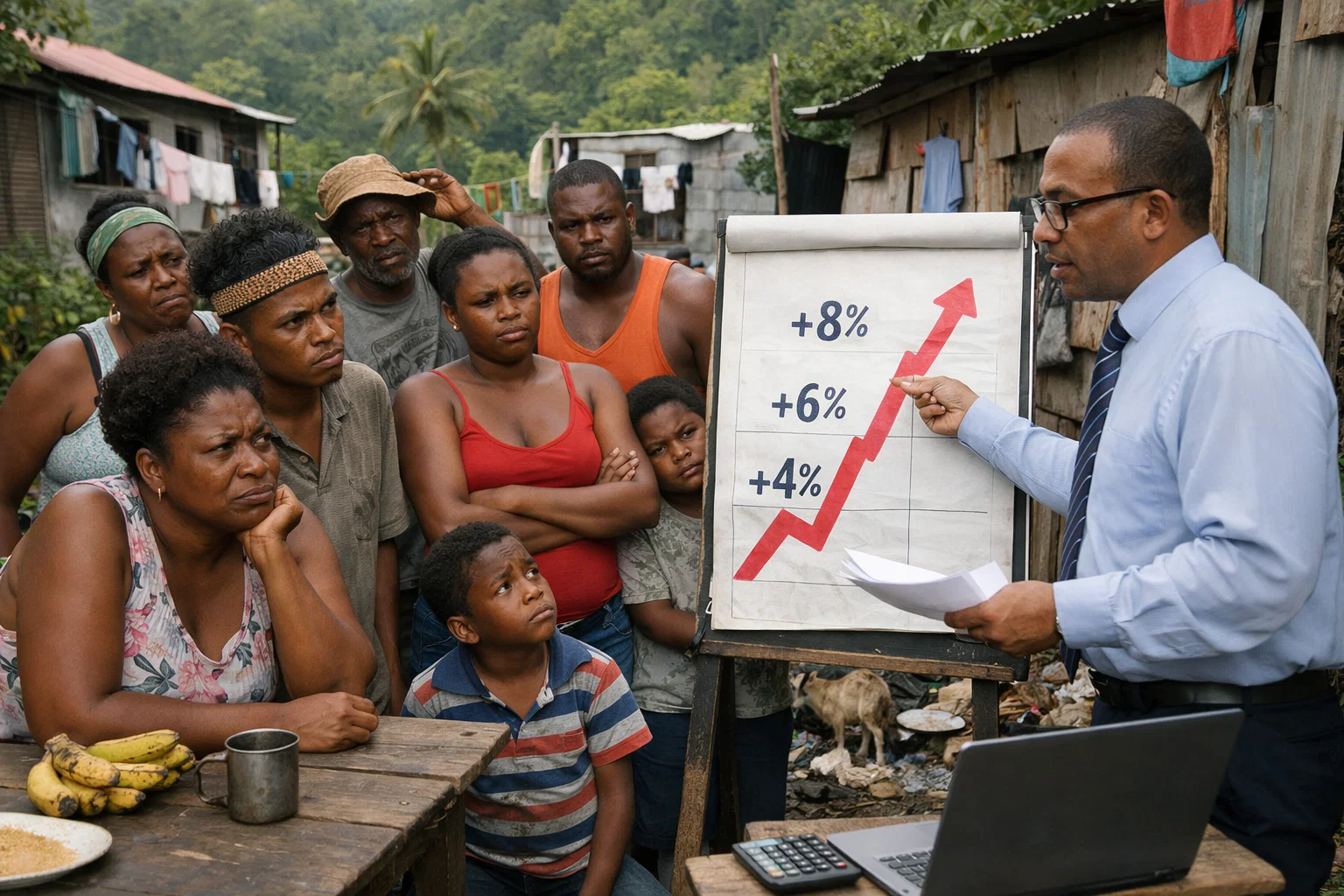
While aggregate indicators show improvement, the uneven nature of the economic recovery across the labour market receives less public attention, as employment gains and income distribution have not necessarily kept pace with headline growth.
This disconnect contributes to the widely held perception that economic progress is not being experienced evenly. In small economies, social cohesion is closely tied to economic opportunity. Consequently, this perception carries real implications for policy credibility and public confidence.
Balancing Optimism With Prudence
The IMF’s assessment does not suggest that Dominica is on an unsustainable path. On the contrary, it acknowledges improvements in key macroeconomic indicators and recognises the role of ongoing investments in supporting growth. However, it also makes clear that these gains are conditional and that significant vulnerabilities remain.
The challenge is to place positive indicators in their proper context by ensuring that growth transitions from public investment into productivity, private sector expansion, and diversification. Furthermore, fiscal discipline must lead to measurable debt reduction while structural reforms move from recommendation to actual implementation.
The Underlying Question
Ultimately, the question facing Dominica is not whether the economy is growing, but whether it is strengthening in a way that can withstand future shocks and deliver broad-based improvements in living standards.
Headline figures can provide reassurance, but they do not fully capture the depth or distribution of economic progress. A more comprehensive assessment requires attention to the composition of growth, the persistence of fiscal risks, and the pace of structural change.
These are the factors that will determine whether current gains represent a temporary improvement or a foundation for sustained development.
This article is copyright © 2026 DOM767