


Fort Young
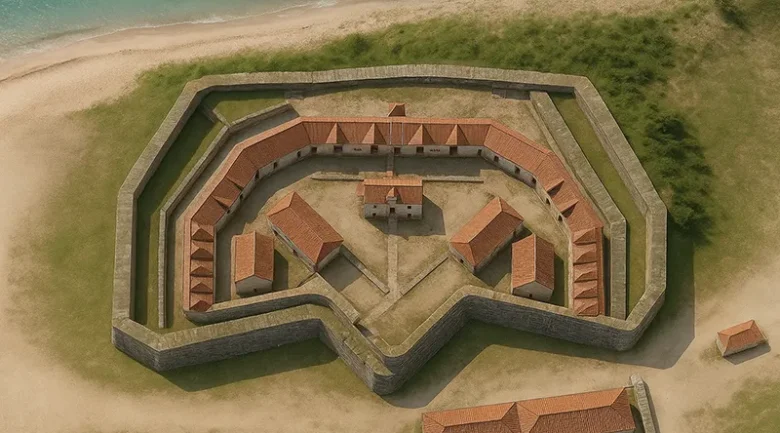

Fort Young served as Dominica’s principal military garrison during the height of British colonial rule, symbolising imperial defence strategy in the Eastern Caribbean. Constructed in the late 18th century and named after Sir William Young, then Governor of the Leeward Islands, Fort Young was strategically perched on the waterfront of Roseau to secure British control over the island against French invasion and internal uprisings.
Strategic Military Architecture
Fort Young’s placement along the western coast of Dominica was no accident. Overlooking the Caribbean Sea and flanking the entrance to Roseau, it was positioned to monitor maritime movement and defend the capital. The structure included barracks, officers’ quarters, storerooms, a gunpowder magazine, and artillery placements that overlooked the shoreline. Its thick stone walls and elevated batteries offered a strategic advantage against naval incursions.
Defensive Role in the 18th and 19th Centuries
The British intensified fortification efforts in Dominica after seizing the island definitively in 1763 under the Treaty of Paris. Given Dominica’s central location between French-held Martinique and Guadeloupe, Fort Young was part of a wider system of defensive posts, which included Morne Bruce Garrison and inland patrol stations. It played a central role during the French invasion attempt 1778 and subsequent skirmishes throughout the late 18th century.
Sir William Young and the Naming of the Fort
Sir William Young, the fort’s namesake, was a British colonial administrator whose tenure coincided with the British consolidation of power in the Lesser Antilles. Naming the fort after him was a gesture of authority and a marker of imperial presence on an island frequently contested by European powers.
Administrative Functions and Later Years
Fort Young also housed colonial administrative offices and later served as a signal post and base for customs monitoring. By the mid-19th century, however, the military significance of such forts declined as new threats emerged and the British Empire reorganised its Caribbean defence priorities. Gradually, the fort was decommissioned, and its barracks and other structures fell into disuse.
Remnants and Transformation
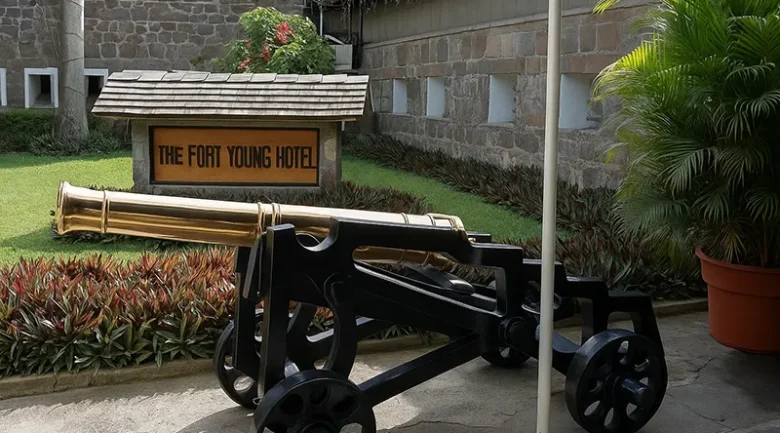
Though its original purpose faded with time, Fort Young’s stonework and architectural outlines remained intact into the 20th century. In the late 1960s, parts of the ruins were integrated into the modern Fort Young Hotel. This heritage-conscious establishment retains several original masonry sections and cannon placements from the colonial garrison. Thus, Fort Young’s military legacy lives on within contemporary structures that carry its name.
Key Colonial Events Involving Fort Young
- 1778: Site of defense during the French attempt to retake Dominica.
- 1805: Following another French incursion, the fort contributed to local defence alongside Morne Bruce Garrison.
- 1834: The Emancipation of enslaved people across British colonies saw Fort Young as a colonial checkpoint against rebellion.
Present-Day Legacy
Though now associated with tourism through the Fort Young Hotel, the historic fort’s significance is deeply tied to Dominica’s colonial narrative. It represents an era when military might, political administration, and imperial competition defined the island’s urban geography. Its stone walls, old cannons, and coastal orientation mark a time when Dominica was central to Britain’s Caribbean military strategy.
Educational and Cultural Relevance
Today, Fort Young’s remnants are sometimes incorporated into local history tours and serve as tangible links for students, scholars, and visitors exploring Dominica’s colonial heritage. Its preserved sections offer a rare insight into British colonial military design in a Caribbean island setting where few such structures remain visible.


